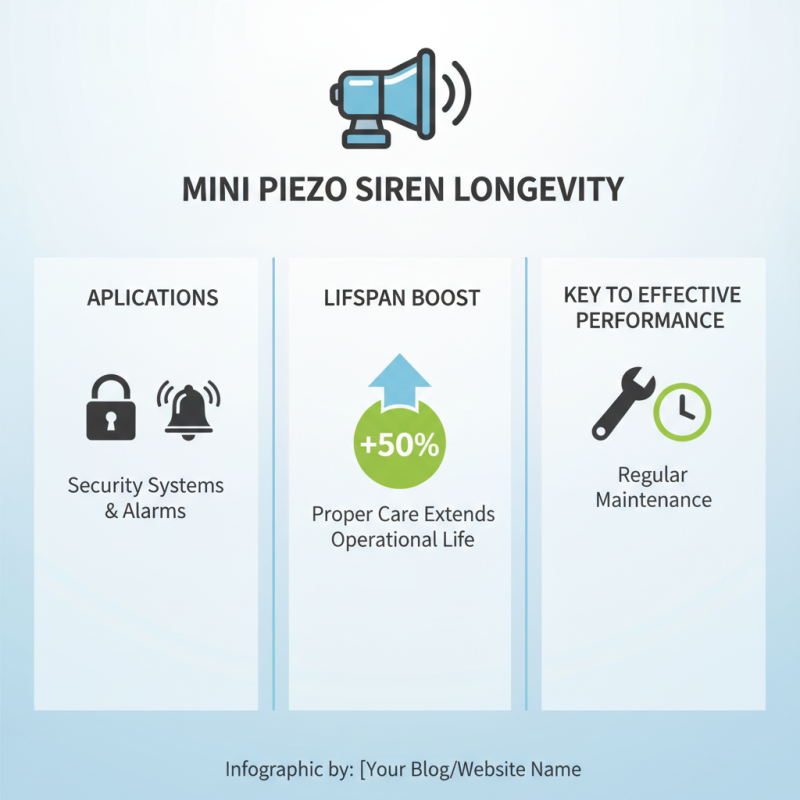
Best Mini Piezo Siren Options for Effective Sound Alerts?
In the ever-evolving world of sound alert systems, the Mini Piezo Siren stands out as a compact, effective solution. Renowned industry expert Dr. Emily Carter highlights, “The Mini Piezo Siren offers unmatched sound clarity in a small package.” This technology has transformed alert systems, bringing high-performance sound alerts to various applications.
Many today seek effective sound alerts for security and safety. The Mini Piezo Siren is popular in alarm systems, vehicles, and even home use. Its small size does not compromise output quality. However, some users may underestimate its power or struggle with installation. This can lead to missed alerts or inefficient use of the device.
When selecting the right Mini Piezo Siren, consider sound level, frequency range, and durability. It’s essential to match the siren to specific needs. While these sirens are effective, individual experiences may vary. Users should weigh pros and cons to find the best fit for their requirements.
Types of Mini Piezo Sirens Available in the Market
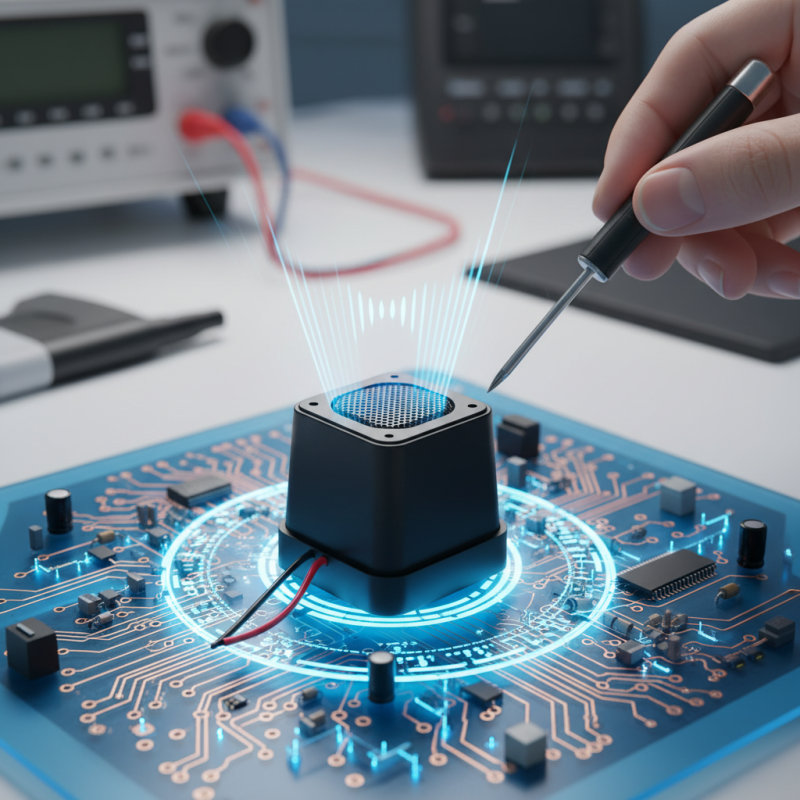
Mini piezo sirens have become increasingly popular due to their compact size and effective sound output. These devices are used in alarm systems, security applications, and various electronic projects. There are several types of mini piezo sirens available in the market, each with unique features and specifications.
One common type is the continuous tone piezo siren. These sirens emit a steady sound that is effective for general alarm systems. According to recent industry reports, continuous tone sirens produce frequencies between 2 kHz to 4 kHz, ensuring they are loud enough to attract attention in noisy environments. They are often chosen for their simplicity and reliability.
Another option is the pulsing tone piezo siren, which alternates between high and low frequencies. This type can be more attention-grabbing due to the varying sound patterns. Reports suggest that pulsing tone sirens can reach up to 110 dB, making them suitable for securing areas with high foot traffic. However, some users note that pulsing tones can be perceived as less professional in certain settings.
Some mini piezo sirens are designed for specific applications, such as automotive use. These sirens often operate on lower voltage, which may limit their sound output. While this is beneficial for battery-powered devices, users may find them less effective in outdoor settings. Overall, choosing the right mini piezo siren depends on the intended use and the desired sound characteristics.
Key Features to Consider When Choosing a Mini Piezo Siren
When selecting a mini piezo siren, a few key features stand out. Powerful sound output is essential. A siren with at least 100 dB can effectively alert in noisy environments.
Size also matters. Compact designs make installation easier in tight spaces. Ensure it fits where you plan to use it. Battery-operated options provide additional flexibility.
You should consider the environmental ratings as well. A siren with weatherproof capabilities can withstand the elements. This is important for outdoor applications. Look for models with a range of tones. Variety can help differentiate alerts. Sometimes the basic sound isn’t enough.
Remember that durability impacts performance. Cheaper sirens may not last long. Assess materials used in construction. They should endure wear over time. A bit of research here can save money later. Also, check for warranty options. A short warranty may indicate lower quality. Making these considerations helps ensure effective alerts.
Comparative Analysis of Popular Mini Piezo Sirens
When evaluating mini piezo sirens, it's essential to understand their sound output and efficiency. Recent studies indicate that effective sirens typically produce sound levels between 85 dB and 110 dB. This range ensures they are audible in various environments, from residential areas to industrial settings. The frequency response is equally important; most useful models range from 2 kHz to 4 kHz. This frequency range maximizes clarity and ensures that alerts are easily identifiable.
Mini piezo sirens are known for their compact design and low power consumption. Many models operate on 12V or 24V systems, allowing for versatility in installation. However, potential users should consider some drawbacks. Some sirens can be overly sensitive to temperature changes, impacting their performance. Regular testing and maintenance can mitigate these issues.
Tips: Always check the decibel rating before purchasing. A siren with a lower rating may not be sufficient for larger spaces. Ensure that the installation environment is considered. Sirens placed in enclosed spaces may reverberate, altering sound clarity. Regular reviews of the system's performance can help identify any degradation in quality.
Best Mini Piezo Siren Options for Effective Sound Alerts
| Model |
Sound Output (dB) |
Voltage (V) |
Dimensions (mm) |
Operating Temperature (°C) |
Weight (g) |
| Siren A |
110 |
12 |
30 x 30 x 15 |
-20 to +60 |
25 |
| Siren B |
100 |
6 |
40 x 40 x 20 |
-10 to +70 |
30 |
| Siren C |
105 |
9 |
35 x 35 x 15 |
-30 to +50 |
20 |
| Siren D |
95 |
12 |
45 x 45 x 25 |
-10 to +60 |
35 |
Applications and Use Cases for Mini Piezo Sirens
Mini piezo sirens are versatile tools used in various applications. They are small, lightweight, and highly effective for sound alerts. Common uses include alarms in homes, security systems, and appliances. Their compact size makes them suitable for tight spaces.
In industrial settings, these sirens can signal machine malfunctions or notify workers of safety issues. The loud sound produced helps gather attention quickly, which is critical in emergencies. They are also used in vehicles for backup alerts or parking assistance. Their reliability makes them a preferred choice in these scenarios.
**Tip:** When selecting a mini piezo siren, consider the sound output. Higher decibels mean louder alerts. Look for a model that meets your specific needs.
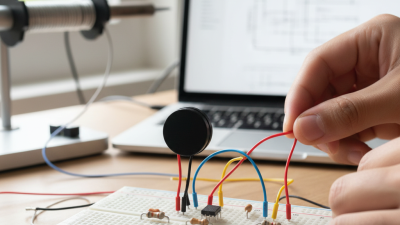
Another interesting application is in DIY projects. Hobbyists often use mini piezo sirens in robotics or interactive devices. They can easily integrate these sirens into their designs for effective feedback or alerts.
**Tip:** Test the sound in different environments. The acoustics might change based on the setting, like in an open space versus a closed room. Adjustments may be needed for optimal performance.
Mini Piezo Siren Sound Level Comparison