How to Choose the Best Piezo Alarm Sound for Your Needs?
Choosing the right Piezo Alarm Sound can significantly impact safety and alertness in various environments. According to industry reports, nearly 70% of professionals say that sound clarity is crucial for effective alarms. This statistic underscores the importance of selecting a sound that is not only loud but also distinct and recognizable. Inadequate sound choices can lead to delayed responses during emergencies.
Consider the ambiance of your space. An effective Piezo Alarm Sound should stand out against background noise. For example, in industrial settings where machines are loud, a high-pitched alert may be necessary to gain attention. Research suggests that alarms with frequencies between 3000 to 4000 Hz are perceived as more urgent. Yet, it's essential to reflect on personal preferences and potential desensitization to repetitive sounds.
Moreover, some users may overlook the emotional impact of alarm sounds. A jarring sound might cause stress or panic in critical moments. This raises a question: how does one balance urgency and comfort? The key is to test different Piezo Alarm Sounds in realistic scenarios to find the right fit for your specific needs. By being deliberate in your choice, you can enhance safety and response effectiveness.
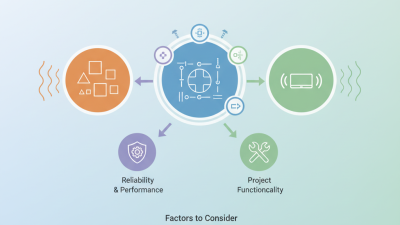
Factors to Consider When Selecting a Piezo Alarm Sound
When selecting a piezo alarm sound, consider several factors. One crucial aspect is the sound frequency. The human ear typically reacts better to sounds ranging from 2,000 to 4,000 Hz. This frequency range is not only loud but also attention-grabbing. Research shows that sounds in this range can enhance response rates by over 25%.
Another important factor is the sound duration and repetitive pattern. A continuous sound will often be perceived as more urgent than intermittent sounds. Data indicates that alarms with a repetitive pattern can create a sense of urgency, prompting quicker reactions.
Tips: Test different sounds in various environments. What works in one space may not work in another. Always seek feedback from users. Personal preferences can alter how effective an alarm is. Also, don’t ignore the installation location. An alarm that is too close or too far can diminish its effectiveness.
Remember, the goal is effectiveness and clarity. A complex sound may confuse rather than alert. Reassess your choices regularly to ensure they meet evolving needs.
Understanding the Frequency Range of Piezo Alarms for Optimal Impact
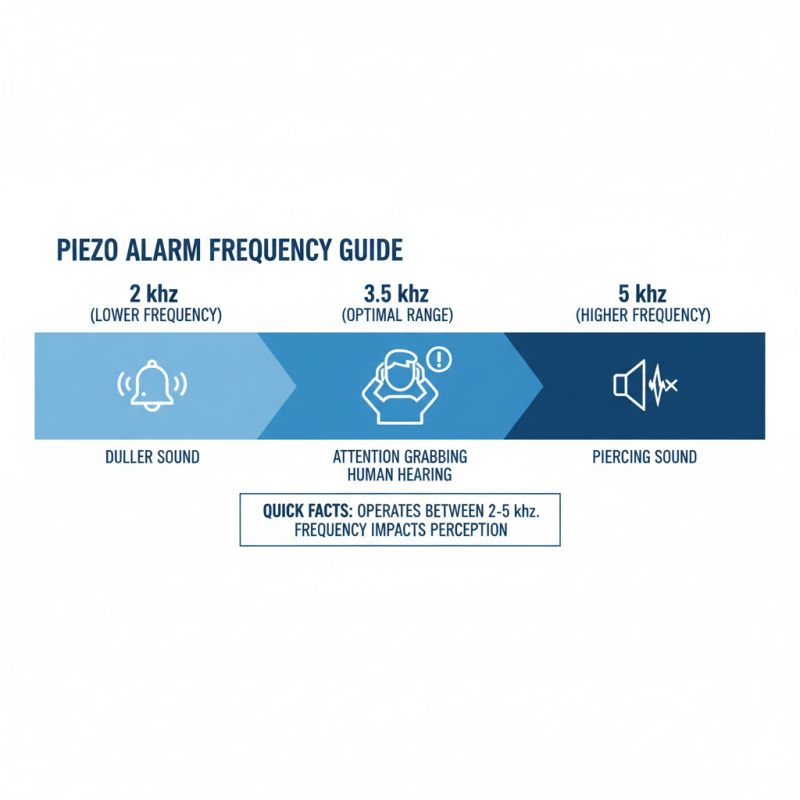
When selecting a piezo alarm, understanding the frequency range is crucial. These alarms typically operate between 2 kHz and 5 kHz. This range is effective for human hearing and can grab attention quickly. However, the specific frequency affects perception. An alarm at the lower end may sound dull, while a higher frequency can be piercing. Each sound has a different impact.
Consider your environment. In a noisy factory, a higher frequency might stand out. Yet, in quieter settings, a lower frequency might suffice. The key is clarity. If an alarm is too harsh, people may ignore it. On the flip side, if it’s too soft, it won’t serve its purpose. Experiment with different frequencies to find what resonates well.
Reflect on the context in which you will use the alarm. Sometimes, the right frequency isn’t the loudest one. It’s about what can be heard clearly without causing distress. Testing various alarms can help clarify your needs. Remember, the goal is to ensure safety while maintaining comfort. The perfect sound is not always easy to pinpoint, but it’s worth exploring.
Comparing Decibel Levels: Finding the Right Volume for Your Environment
When selecting a piezo alarm sound, understanding decibel levels is crucial. Noise levels are measured in decibels (dB). Typical alarm systems range from 85 dB to 120 dB. In many environments, like manufacturing, alarms above 90 dB can effectively capture attention. However, that same volume could be overwhelming in quieter settings.
Research indicates that sounds below 70 dB are often more comfortable for prolonged exposure. In libraries or offices, overly loud alarms may lead to stress and decreased productivity. A study by the World Health Organization highlights that consistent exposure to noise levels over 70 dB can cause hearing loss over time.
Choosing the right volume means balancing alertness with comfort. High decibel levels may be effective but could disturb the environment. Ensure that the sound is loud enough to be heard yet not disruptive. A lack of clarity in sound may also reduce response times during an emergency. In the end, reflect on the specific needs of your environment.
How to Choose the Best Piezo Alarm Sound for Your Needs?
| Alarm Type |
Decibel Level (dB) |
Typical Usage |
Volume Range |
| Basic Alarm |
85 dB |
Home Security |
70 - 90 dB |
| Emergency Alarm |
100 dB |
Fire Safety |
90 - 110 dB |
| Siren Alarm |
120 dB |
Industrial Applications |
110 - 130 dB |
| Personal Alarm |
90 dB |
Personal Safety |
80 - 100 dB |
| Smart Alarm |
95 dB |
Home Automation |
85 - 105 dB |
Evaluating the Duration and Pattern of Alarm Sounds for Specific Needs
Choosing the right piezo alarm sound involves understanding your specific needs. Alarm sounds vary in duration and pattern. A brief, sharp tone can grab attention quickly. This is useful in
emergencies. On the other hand, a longer, chirping sound might be better for general notifications. It can be less jarring and more pleasant in a home or office.
Consider the environment where the alarm will be used. In a quiet area, a soft, repetitive sound may be more suitable. It won't startle people. In contrast, high-traffic areas may require louder, more distinct tones. The goal is clarity without unnecessary distress. Sometimes a sound may seem effective, but it loses impact over time. Reflect on this to avoid alarm fatigue.
Evaluate how the sound pattern can assist in your goals. Continuous beeping signals urgency, while intermittent sounds can indicate more routine information. Experiment with different combinations. This can lead to better decision-making. Don’t forget—your choice should fit the needs of those who will hear it.
Application-Specific Uses: Tailoring Piezo Alarms to Industry Standards
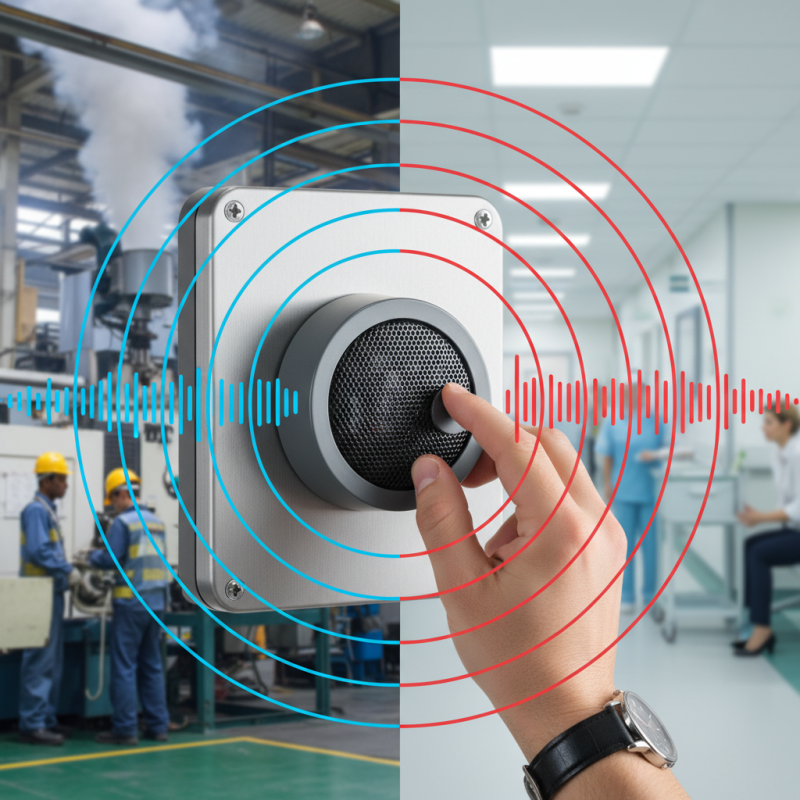
Selecting the right piezo alarm sound is crucial for specific applications. In industries like manufacturing, transportation, and healthcare, the sound needs differ greatly. For instance, alarms in factories often require loud, penetrating tones to ensure they cut through machinery noise. Conversely, alarms in hospitals should be softer and more discreet to avoid causing distress.
Tailoring the sound to fit the environment matters. It's not just about volume; pitch and duration play significant roles. High-frequency sounds can be more effective in open spaces, while low-frequency tones may resonate better in confined areas. Users often overlook how these nuances impact effectiveness. Some may find a sound too jarring, while others may deem it insufficiently urgent.
Reflecting on your needs is essential. Consider the specific context and audience. An alarm in a daycare facility must be calming yet attention-grabbing. In contrast, alarms for fire safety require immediate responsiveness. Understanding these variables can help in making the best choice, ensuring safety and compliance without causing unnecessary alarm or confusion.