2026 How to Choose the Right Amp Module For Active Speaker?
Choosing the right amp module for an active speaker can be daunting. Industry expert John Smith once stated, "The perfect amp module enhances sound without overwhelming it." This highlights a vital aspect of selection—balance in audio quality.
When selecting an amp module for active speakers, consider the power output. Too much can lead to distortion, while too little may not drive the speakers effectively. Match the module with your speaker's specifications. Remember, every performance space is different.
Many overlook the importance of compatibility. An unsuitable amp module can result in poor sound. Engaging with users and seeking expert advice can offer valuable insights. Take the time to evaluate options and reflect on choices. The right amp module for your active speaker can truly elevate your listening experience.
Understanding the Basics of Amplification for Active Speakers
When considering amplification for active speakers, understanding the basics is crucial. An amplifier's primary role is to boost audio signals. Ideally, it matches the speaker's power handling capability. A mismatch can lead to distortion or damage. For instance, using a weak amp can result in clipping at higher volumes. This can ruin sound quality.
Selecting the right amp module is about knowing your needs. Think about the space size and the type of music. Larger spaces may require more power to fill the room. The impedance of your speakers also plays a significant role. It's often overlooked, but this affects compatibility. Pay attention to wattage ratings.
Sometimes, users ignore how the amp interacts with the speaker's sensitivity. If the sensitivity is low, higher wattage may be necessary. There is a balance to find here. Testing different combinations can lead to unexpected results. Don't hesitate to revise your choices based on what you learn. Engaging with your equipment can enhance the listening experience.
Determining Power Requirements for Your Active Speaker System
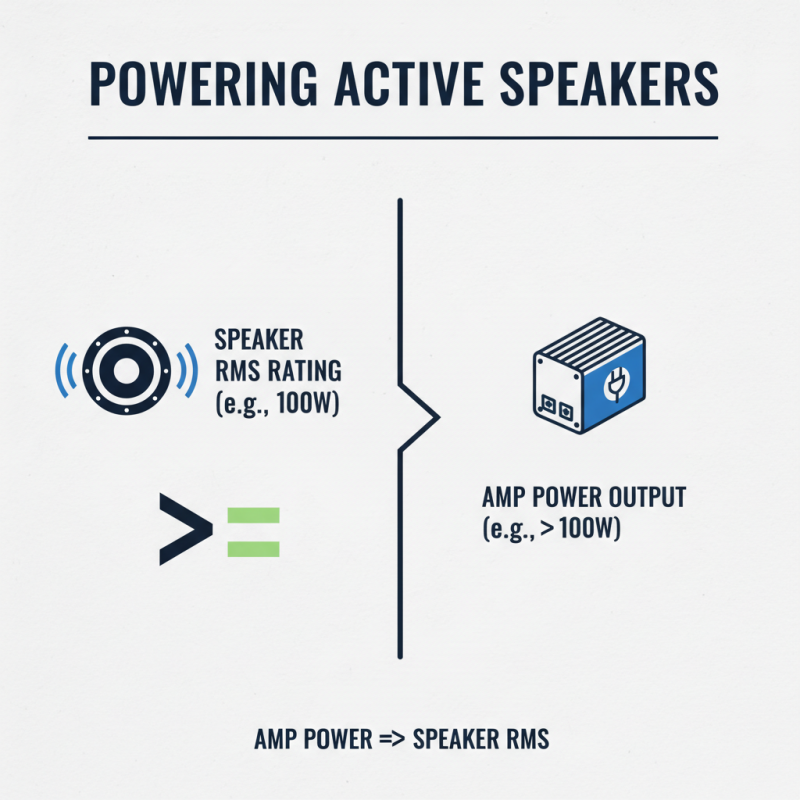
When selecting the right amp module for your active speaker system, understanding power requirements is crucial. Active speakers require sufficient power to drive their built-in amplifiers effectively. According to industry data, speakers typically need an amplification power equal to or greater than their RMS ratings. If a speaker has an RMS rating of 100 watts, aim for an amplifier module that can deliver at least that amount.
Choosing the correct wattage is not straightforward. It’s important to consider the listening environment. For smaller rooms, an amplifier providing 50-100 watts might suffice. In larger spaces, consider 200 watts or more. Experts also suggest that peaks in audio can reach 3-6 dB higher than the average. Ensure your amp can handle these spikes to avoid distortion.
**Tip:** Always factor in headroom for unexpected audio peaks. This will help maintain sound quality and protect your speakers.
Another factor to evaluate is impedance. Most active speakers operate at 4 or 8 ohms. An amp should match or closely align with this impedance for optimal performance. Mismatching can lead to overheating or underperformance. Regularly assess your setup to ensure efficiency.
**Tip:** Keep an eye on the amp's temperature during prolonged use. Overheating can signify it’s struggling to meet power demands.
Exploring Compatibility Between Amp Modules and Speaker Drivers
When selecting an amp module for an active speaker, compatibility is key. A report by the Audio Engineering Society indicates that mismatched power ratings can lead to suboptimal sound quality. An ideal match ensures that the amp's output aligns with the speaker driver’s requirements. For instance, an amp with 50 watts output paired with a driver rated for 40 to 60 watts typically performs well. This alignment prevents distortion and potential damage.
Frequency response is another critical factor to consider. Different amp modules may emphasize certain frequencies, conflicting with the speaker design. An analysis from the International Society of Audio Professionals highlights that compatibility issues can alter the intended sound signature. Testing is essential. Many users overlook this, leading to disappointment. A good practice is to listen before committing. This step can reveal whether the amp driver combo truly satisfies the listener's expectation.
Crossover compatibility also comes into play. It's crucial to ensure that the crossover can handle the amp's frequency range. The lack of coherence can diminish the overall audio experience. Many enthusiasts focus too much on power and ignore these technical details, risking poor audio performance. Each amp and speaker relationship is unique, requiring thoughtful consideration to achieve the best results.
2026 How to Choose the Right Amp Module For Active Speaker?
| Amplifier Type |
Power Output (W) |
Impedance Compatibility (Ω) |
Frequency Response (Hz) |
Connection Type |
| Class D |
50 |
4 - 8 |
20 - 20,000 |
XLR, RCA |
| Class AB |
75 |
6 - 8 |
20 - 20,000 |
XLR, TRS |
| Hybrid |
100 |
4 - 8 |
10 - 30,000 |
Balanced, Unbalanced |
| Class T |
60 |
4 - 6 |
20 - 22,000 |
USB, RCA |
Evaluating Features and Specifications of Amp Modules
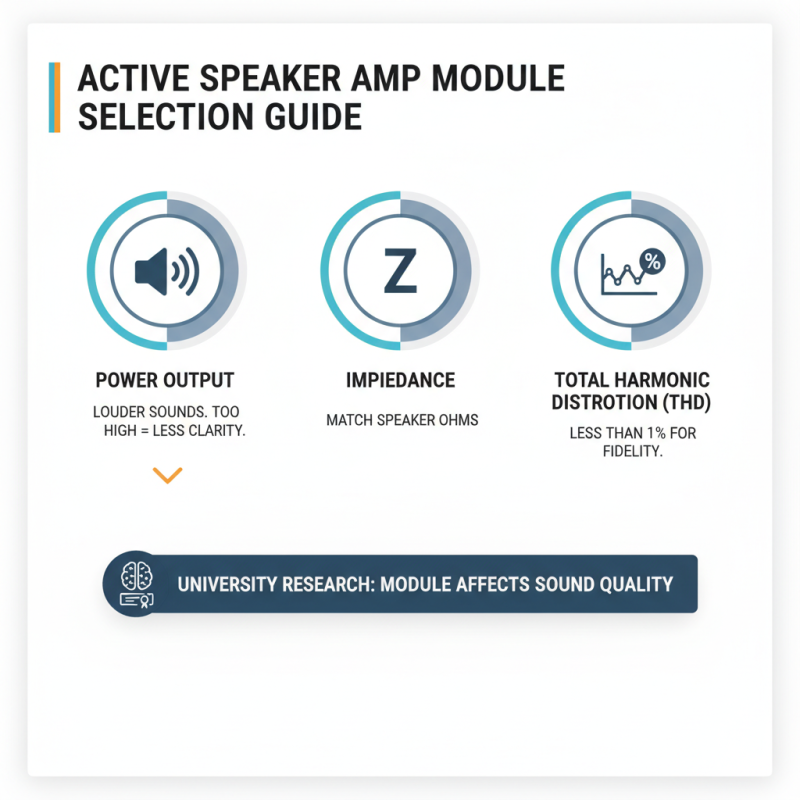
When selecting an amp module for active speakers, understanding the features and specifications is vital. University studies show that amp modules significantly affect sound quality. Key specifications include power output, impedance, and total harmonic distortion (THD). A module with higher power output offers louder sound levels, but it might compromise clarity at high volumes. Ideally, aim for less than 1% THD for optimal audio fidelity.
Consider the efficiency ratings of the amp module, which can impact energy consumption. Higher efficiency ratings lead to longer operating times and less heat generation. Reports indicate that modules with over 90% efficiency are preferred in professional setups. However, some users overlook this detail, leading to excessive energy use and potential overheating.
Durability and build quality also deserve attention. Many opt for lightweight, compact designs, sacrificing robustness. This choice can lead to malfunctions in demanding environments. Reflecting on user reviews shows a trend: durability is often underestimated until issues arise. Balancing weight and strength is crucial for long-term satisfaction. Make thoughtful decisions, as overlooking these details can affect performance drastically.
Budget Considerations: Balancing Quality and Cost in Amp Choices
When selecting an amp module for your active speaker setup, budget is crucial. Quality sound often comes at a cost. However, it’s important to find a balance. Aim for an amp that delivers good performance without breaking the bank. Consider the specifications you need. Higher wattage may enhance sound quality, but it can also increase the price.
Look for options that fit within your financial limits. There are affordable choices that still provide decent sound. Check reviews to see how different amps perform at various price points. Sometimes, a lower-priced amp may surprise you with its quality.
Remember, your decision doesn’t have to be perfect. Mistakes can happen. You might overestimate your needs or underestimate your budget. Reflect on choices after testing. An amp that seems ideal may not feel right once paired with speakers. Trust your ears and adjust your budget as necessary.
2026 Amp Module Budget Considerations for Active Speakers