Top High Pressure Sensors for Accurate Measurements and Applications?
High Pressure Sensors play a vital role in numerous industries, including oil and gas, manufacturing, and healthcare. Accurate pressure measurements are crucial for ensuring safety and efficiency in critical applications. The technology behind these sensors has advanced significantly, offering greater reliability and precision.
In various scenarios, such as monitoring equipment in high-stress environments, the importance of selecting the right high-pressure sensor cannot be overstated. Different sensors have unique features, and their suitability depends on application specifics. Understanding how to evaluate these sensors can be a challenging task. It's essential to consider factors such as calibration, material compatibility, and response time.
Additionally, while high pressure sensors are often reliable, they can sometimes be misused. Users must ensure proper installation and maintenance to avoid measurement errors. A simple oversight can lead to inaccuracies that might compromise an entire system. Therefore, making informed decisions is vital when choosing high-pressure sensors for your application.
Overview of High Pressure Sensors and Their Importance in Measurements
High pressure sensors play a crucial role in various industries. They measure pressures often exceeding 1,000 psi accurately, ensuring safety and efficiency. Key sectors include oil and gas, aerospace, and manufacturing. According to a report from Grand View Research, the global market for pressure sensors is projected to reach $9.5 billion by 2025, highlighting their increasing significance.
These sensors help monitor critical processes. For example, in oil extraction, they detect pressure changes in real-time. Poor measurement can lead to costly failures or environmental hazards. A study by MarketsandMarkets states that the demand for high-pressure sensors is set to grow by 8% annually. This growth reflects their importance for safety compliance and performance optimization.
However, not all high-pressure sensors guarantee accuracy in harsh environments. Factors like temperature fluctuations and physical vibrations can affect measurement reliability. Industries must choose wisely and often conduct regular calibrations. Continuous advancements in technology aim to address these challenges, yet maintaining consistent performance remains a critical focus.
Types of High Pressure Sensors: Technologies and Working Principles
High pressure sensors play a vital role in various industries, providing precise measurements for critical processes. These sensors come in multiple types, each utilizing unique technologies and operating principles. Strain gauge sensors, for instance, measure pressure based on the deformation of a material. They are widely used due to their reliability and accuracy. However, their performance can vary under extreme conditions or with the presence of fluctuating pressure.
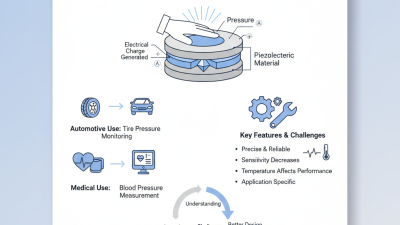
Another common type is the piezoelectric sensor, which generates an electrical charge in response to applied pressure. This feature makes them suitable for dynamic measurements. Their ability to detect rapid changes is impressive, yet they may struggle with static pressure readings. Capacitive sensors are also noteworthy. They measure pressure by observing changes in capacitance caused by pressure changes. Although they provide great sensitivity, they require careful calibration to ensure accuracy.
The selection of an appropriate high pressure sensor is crucial. Factors like temperature, medium, and mounting conditions significantly affect performance. Understanding these variables can be challenging. Not all sensors perform equally well in every application, creating a need for thorough evaluation and selection processes. Thus, careful consideration is essential for optimizing sensor performance in industrial settings.
Top High Pressure Sensors: Measurements vs Applications
Key Features to Consider When Selecting High Pressure Sensors
When selecting high pressure sensors, key features are crucial for accurate measurements. Accurate readings depend on the sensor's range and resolution. Common pressure ranges vary significantly, typically from 0 to 5000 psi. The selection should be based on your specific project requirements and expected pressure conditions.
Another vital aspect is the sensor’s material compatibility. Sensors must withstand different media, including liquids and gases. Wrong material choices can lead to rapid degradation. This can affect both performance and safety. According to recent studies, failure rates due to material incompatibility can exceed 20% in certain industries.
Consider the sensor's output type. Analog and digital outputs are common options. Ensure it aligns with your system's specifications. Installation and maintenance ease will also impact long-term performance. Tips: Check calibration standards. Regular calibration helps maintain accuracy. Lastly, evaluate environmental factors like temperature and humidity. These can alter sensor performance significantly over time.
Top High Pressure Sensors for Accurate Measurements and Applications
| Sensor Type |
Pressure Range (psi) |
Accuracy (%) |
Output Signal |
Temperature Range (°C) |
Application |
| Piezoelectric |
0 - 10,000 |
±0.5 |
Voltage |
-40 to 125 |
Industrial Automation |
| Strain Gauge |
0 - 5,000 |
±1.0 |
Current |
-20 to 85 |
Hydraulic Systems |
| Capacitive |
0 - 15,000 |
±0.25 |
Voltage |
-30 to 100 |
Aerospace |
| Optical |
0 - 20,000 |
±0.1 |
Digital |
-40 to 120 |
Pharmaceuticals |
Applications of High Pressure Sensors in Various Industries
High-pressure sensors play a crucial role across various industries. They are essential for monitoring systems that operate under extreme pressure. These sensors ensure safety and efficiency in processes where pressure is a critical factor. For instance, in the petrochemical industry, accurate pressure measurements can prevent dangerous explosions. These sensors enable operators to maintain optimal conditions. They also facilitate the quality control of produced materials.
In the food and beverage sector, high-pressure sensors are vital for processes like pasteurization. This method requires precise control over pressure levels to ensure food safety. Similarly, in the aerospace industry, reliable pressure data is critical for both aircraft systems and structural integrity. However, using these sensors isn't always straightforward. Calibration can be challenging, and environmental factors may affect readings. Regular maintenance and adjustments are often needed to ensure accuracy.
High-pressure sensors find their applications in medical devices as well. They monitor blood pressure in real time, contributing to patient safety. Yet, there are instances where sensor failure can lead to severe consequences. This highlights the importance of choosing the right sensor and regular assessment of its condition. Not all sensors perform equally well in high-pressure environments, and this variability can be a source of concern.
Market Trends and Innovations in High Pressure Sensor Technology
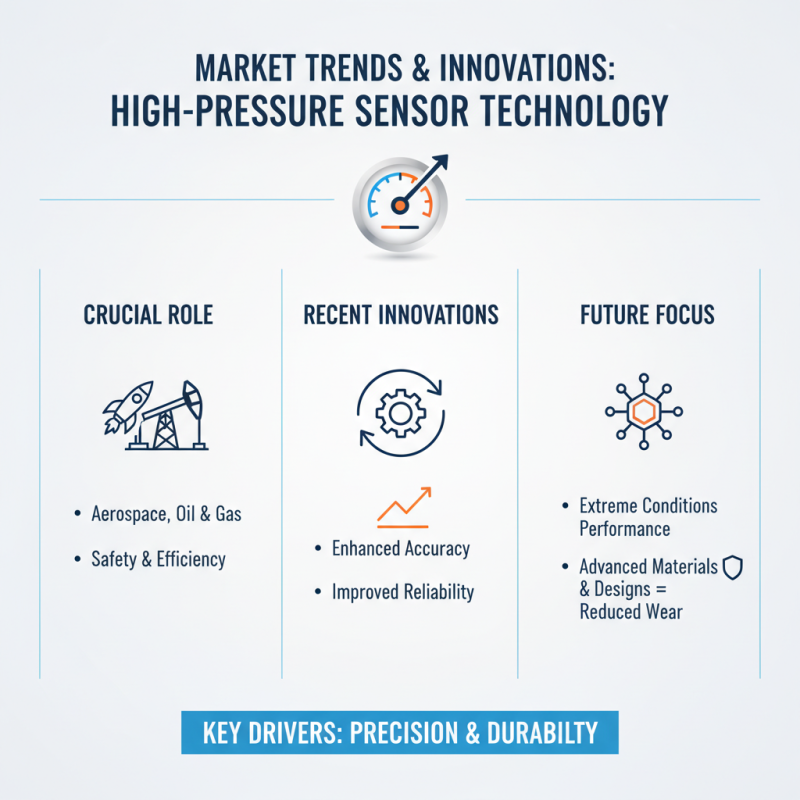
High pressure sensors play a vital role in various industries, from aerospace to oil and gas. These sensors are crucial for ensuring safety and efficiency. Recent innovations have enhanced their accuracy and reliability. Manufacturers are now focusing on developing sensors that maintain performance under extreme conditions. Advanced materials and designs are being used to reduce wear and tear, which often leads to inaccuracies.
Market trends point towards miniaturization and integration of sensors into existing systems. This allows for easier installation and better performance tracking. Wireless technology is becoming increasingly popular. By eliminating wires, sensors can be placed in remote or difficult-to-access locations. However, this shift raises questions about data security and integrity.
As the demand for accurate measurements grows, so does the necessity for robust calibration methods. Many companies still struggle with maintaining the accuracy of their sensors over time. Developing standard procedures for regular checks can enhance reliability. The challenge lies in implementing these practices consistently across all operational environments.