What is a Piezo Pressure Sensor and How Does it Work?
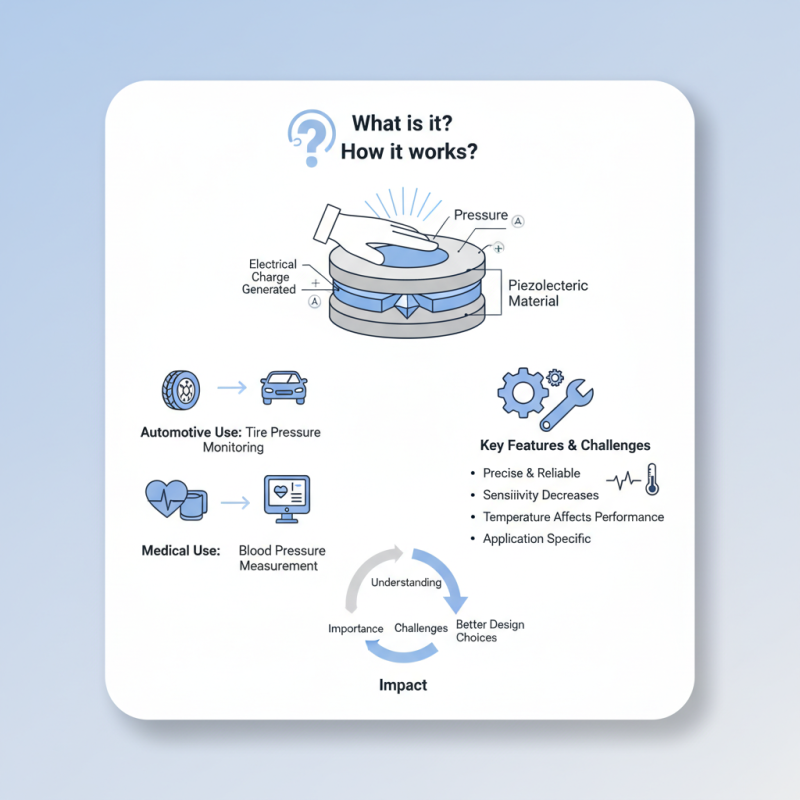
A Piezo Pressure Sensor is an innovative device widely used in various industries. It detects pressure changes using piezoelectric materials. These materials generate an electrical charge when mechanically stressed.
In automotive systems, piezo pressure sensors enhance safety. They monitor tire pressure to prevent blowouts. In the medical field, they measure blood pressure accurately, ensuring patient safety. The technology is precise and reliable, yet it has flaws. Sensitivity can decrease over time.
Understanding how a Piezo Pressure Sensor works helps us grasp its importance. However, there are challenges. Not all sensors are suitable for every application. Temperature variations can affect performance. Exploring these factors leads to better design choices. This makes the technology both fascinating and complex.
Understanding Piezo Pressure Sensors: An Overview
Piezo pressure sensors have revolutionized many industrial applications. These sensors use piezoelectric materials, which generate an electric charge when subjected to mechanical stress. This unique property allows them to measure pressure changes with remarkable precision. According to a recent report by MarketsandMarkets, the global piezoelectric sensor market is expected to reach $5.39 billion by 2028, reflecting a compound annual growth rate of 6.4%. This surge highlights the growing reliance on accurate pressure measurement in various sectors.
In practical applications, piezo pressure sensors are used in automotive, aerospace, and healthcare industries. Their ability to respond quickly to pressure fluctuations makes them ideal for real-time monitoring. For instance, in automotive systems, these sensors help ensure safety and efficiency. However, challenges remain, such as temperature sensitivity and the need for calibration, which can affect readings. While many users appreciate their compact size, some express concerns about their durability under extreme conditions.
The sensors typically operate within a specific pressure range, which can limit their versatility. Industry reports suggest that proper installation and regular maintenance are crucial for optimal performance. Users sometimes overlook these aspects, leading to inaccurate data collection. Understanding these nuances is essential for harnessing the full potential of piezo pressure sensors. This knowledge can significantly improve application outcomes across diverse fields.
Principle of Operation: How Piezo Pressure Sensors Work
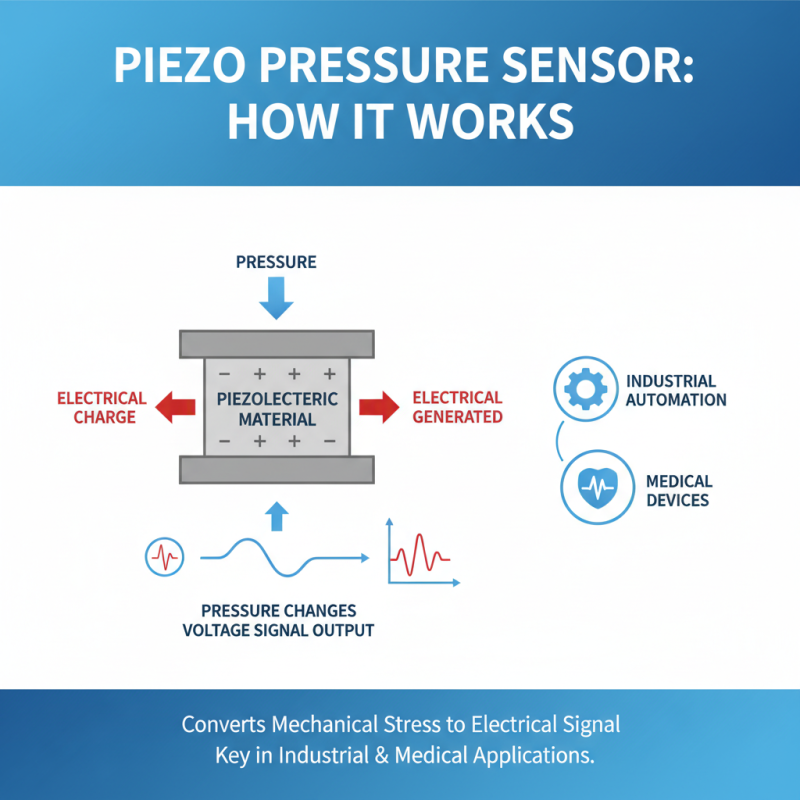
Piezo pressure sensors operate on a fundamental principle: the piezoelectric effect. When mechanical stress is applied to certain materials, they generate an electrical charge. This property forms the basis of piezo pressure sensors. During operation, these sensors convert pressure changes into voltage signals. As pressure fluctuates, the sensor responds, creating a measurable signal output. This technology is key in numerous applications, including industrial automation and medical devices.
Data from industry reports highlight the growth of the piezo sensor market. It is projected to reach $2.5 billion by 2025, illustrating rising demand. Sensors are used in diverse sectors like aerospace and automotive. However, challenges exist. For instance, temperature variations can affect sensor accuracy. Moreover, long-term reliability remains a concern for engineers.
Even with these issues, piezo pressure sensors provide quick response times and high sensitivity. Their compact size makes them suitable for tight spaces. Engineers must balance their benefits against potential drawbacks. Continuous improvements are essential for optimal performance in various applications.
Key Components of Piezo Pressure Sensors
Piezo pressure sensors are crucial devices that measure pressure changes. They convert mechanical pressure into an electrical signal. Understanding their key components helps in grasping their functionality.
The primary component is the piezoelectric material. This material generates an electric charge when subjected to pressure. Commonly used materials include quartz and certain ceramics. A report by the International Society of Automation highlights that piezoelectric sensors can measure pressure with a high frequency response, making them ideal for dynamic pressure applications. This responsiveness is critical in many industries, including aerospace and automotive.
Another important element is the diaphragm. It acts as the interface between the pressure being measured and the piezoelectric element. The diaphragm's thickness and material influence the sensor's sensitivity and range. Additionally, the casing protects the internal components from external conditions. Despite their robust design, variations in temperature and humidity can affect accuracy. Maintaining calibration is essential for reliable results. Systems must be designed to account for these imperfections.
Applications of Piezo Pressure Sensors in Various Industries
Piezo pressure sensors play a crucial role across multiple industries. These sensors use piezoelectric materials to convert pressure changes into electrical signals. Their ability to respond quickly makes them ideal for various applications. For instance, in the automotive sector, they monitor tire pressure to enhance safety. Accurate pressure readings can prevent accidents.
In the aerospace industry, piezo sensors measure pressure during flights. They ensure that aircraft maintain optimal conditions. Proper pressure management is vital for flight safety. Additionally, in manufacturing, these sensors monitor machinery performance. They help prevent failures that could lead to costly downtime.
Healthcare also benefits from these sensors. They are used in medical devices for monitoring bodily functions. Precise pressure readings are essential in critical situations. However, the fragility of piezo materials can pose challenges. This can lead to inaccuracies if not managed carefully. It's essential to continuously improve the robustness of these sensors. The potential of piezo pressure sensors is vast, but ongoing refinement is necessary to ensure reliability in all applications.
Advantages and Limitations of Using Piezo Pressure Sensors
Piezo pressure sensors are known for their sensitivity. They excel in detecting rapid pressure changes. This makes them useful in various applications. However, there are advantages and limitations to consider.
One major advantage is their quick response time. They can accurately measure dynamic pressure events. This is important in environments where fast readings are critical. They are also compact and lightweight. This allows for easy integration into small devices. However, piezo sensors struggle with static pressure measurements. Their performance decreases when the pressure remains constant.
Tips: When choosing a piezo pressure sensor, consider the application. If you need to measure static pressure, look elsewhere. Additionally, think about the temperature range. High temperatures can affect sensor accuracy.
Another limitation is their sensitivity to vibrations. This can lead to false readings in certain environments. Users should also be aware of their output signal. It is a charge signal, which requires specific processing. This complexity can be a hurdle for some applications.