Top Types of Electromagnetic Buzzers You Should Know About?
Electromagnetic buzzers are crucial components in various electronic devices. They convert electrical energy into sound, providing alerts and notifications. According to a recent market report by Research Dive, the global electromagnetic buzzer market is projected to reach $1.3 billion by 2027, highlighting its growing significance.
Dr. Emily Zhang, an expert in acoustic engineering, emphasizes, "Electromagnetic buzzers are essential in modern consumer electronics." Their effectiveness and reliability make them popular in alarm systems, home appliances, and automotive applications. However, many users may overlook factors such as frequency response and power consumption, which can lead to suboptimal performance.
This oversight can impact device efficiency. Selecting the right type of electromagnetic buzzer requires careful consideration of specifications. A deeper understanding of the various types can enhance device functionality. It is essential to reflect on these aspects when designing products to ensure sound quality and user satisfaction.
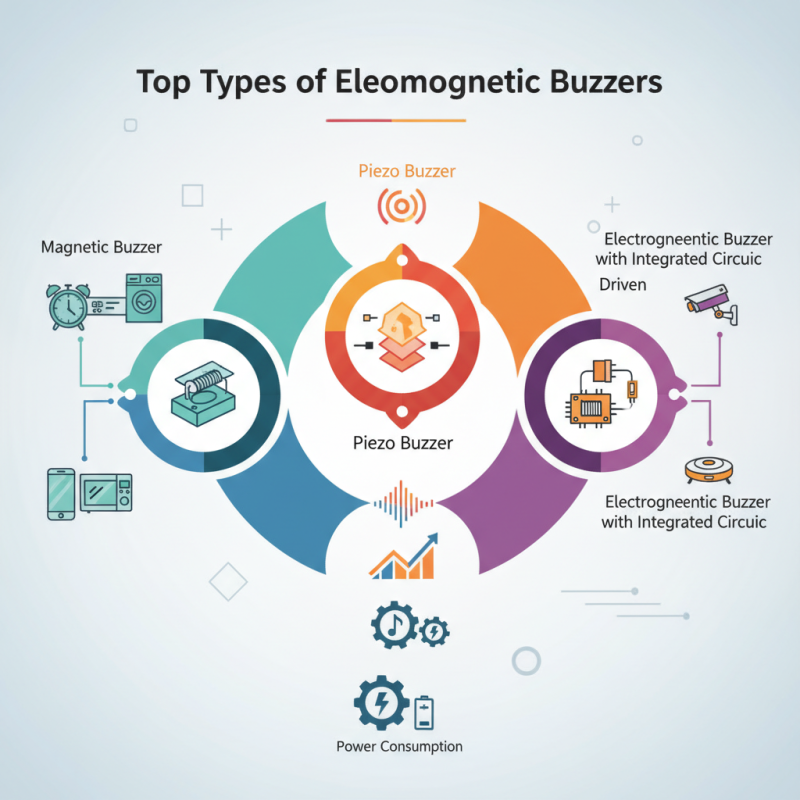
Understanding Electromagnetic Buzzers: An Overview
Electromagnetic buzzers play a vital role in various electronics. They convert electrical energy into sound. This mechanism involves a diaphragm that vibrates when an AC current passes through. These devices generate sounds at a range of frequencies, often measured in hertz (Hz). A study indicates that over 30% of electronic products utilize buzzers for alerts and notifications.
Understanding the types of electromagnetic buzzers is essential. There are typically two main categories: continuous buzzers and intermittent buzzers. Continuous buzzers emit sound without interruption. They are commonly used in alarms and alerts. Intermittent buzzers produce a piecing noise at set intervals. This adds to their effectiveness in producing attention-grabbing signals.
Market reports suggest that the global electromagnetic buzzer market is projected to grow substantially. Key factors include the rising demand in consumer electronics and automotive sectors. By 2025, the market could reach around $1 billion. However, the industry faces challenges. Quality control and sound consistency remain critical areas of concern. Many manufacturers must address these issues to maintain reliability.
Types of Electromagnetic Buzzers and Their Applications
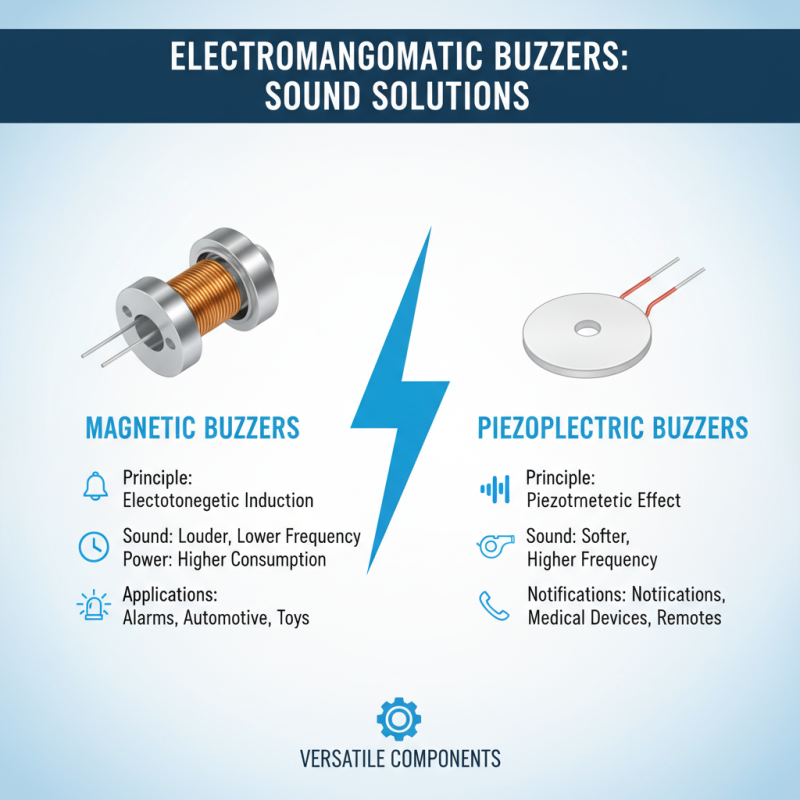
Electromagnetic buzzers are versatile components used in various applications. They convert electrical energy into sound, making them ideal for alarms, notifications, and more. The two primary types are magnetic and piezoelectric buzzers. Each type has distinct features and uses.
Magnetic buzzers often produce a louder sound. They are commonly used in car alarms and home security systems. You can find them in industrial equipment as well. In contrast, piezoelectric buzzers generate sound through vibrations. They are lighter and often used in portable devices like toys and gadgets.
Tips: When choosing a buzzer, consider the sound frequency. Higher frequencies can be shriller, while lower frequencies are more pleasant. Experiment with both types. Reflect on how volume affects user experience. A loud buzzer might be alarming, while a soft one could be too subtle.
In applications like notifications, the design matters. Placement can influence sound quality. Buzzers near openings can enhance performance. However, don’t overlook potential feedback. Too much noise may create confusion. Balance is key for effective use.
Key Features and Specifications of Common Buzzers
When exploring electromagnetic buzzers, understanding their key features is essential. These devices have varying voltages, typically ranging from 3V to 24V. They often feature a simple integration process. The compact size allows for easy installation in tight spaces. Some buzzers emit a single tone, while others can produce multiple frequencies. Not all buzzers offer the same sound output. Selecting the right one for your project can be challenging.
Specifications play a crucial role too. The frequency can vary widely; some buzzers operate around 2 kHz, while others reach 4 kHz or more. Decibels matter; some reach 80 dB, making them quite loud. This can be useful in noisy environments. However, not all buzzers are capable of maintaining this loudness consistently. This variability is something to consider when choosing.
Another important point is duty cycle. This determines how long the buzzer can operate continuously. Many buzzers are rated for intermittent use. Choosing a buzzer with a suitable duty cycle can prevent overheating. The environmental resistance is another factor; some buzzers resist moisture and dust better than others. Users must weigh these features against their specific needs and conditions.
Advantages and Disadvantages of Different Buzzer Types
When considering electromagnetic buzzers, it's important to understand their advantages and disadvantages. One common type is the piezo buzzer. It is compact and efficient, producing sound with minimal power. However, the sound can be quite sharp, which may not be suitable for all applications. Some users find the tone annoying over time. It may also have a limited frequency range which can restrict its use in complex sound signaling.
Another type is the magnetic buzzer. These buzzers offer richer sound quality. They can produce lower frequencies, making them more versatile. Yet, they are usually bulkier and may consume more power. This can be a concern for battery-operated devices. Additionally, they might require special mounting techniques, which can complicate the design process.
There are also direct drive buzzers that simplify operation. They are easy to integrate and cost-effective. But, they can lack the sound clarity found in other types. Users sometimes express dissatisfaction with their performance in noisy environments. Balancing the pros and cons of each type is essential for selecting the right buzzer for your needs.
Choosing the Right Electromagnetic Buzzer for Your Project
Choosing the right electromagnetic buzzer for your project is vital. Different applications require different characteristics. For example, some buzzers are designed for higher frequencies, while others are low-frequency. The frequency can greatly affect sound clarity and volume. A report from the Institute of Electronics indicates that sound frequency impacts user experience by 40%.
Consider the size and shape of the buzzer as well. Many projects require space optimization. Compact buzzers often produce a great sound despite their size. Reports show that miniaturization in electronics increased sales by 35% last year. Still, smaller buzzers may not deliver the same sound quality as larger units. Think about your specific needs before choosing a model.
Power consumption is another significant factor. Many users overlook this aspect. A buzzer that consumes too much power can lead to issues in battery-operated devices. According to recent data, energy efficiency affects overall system performance by approximately 30%. Be wary of this when making your selection. Picking the right buzzer involves understanding your project's needs and limitations. Every choice should reflect a careful balance of these factors.