How to Use Piezo Diaphragm in Your Projects?
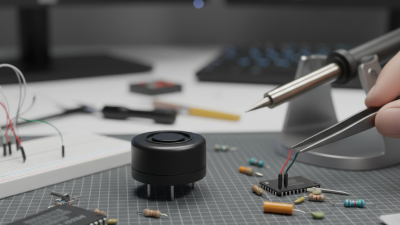
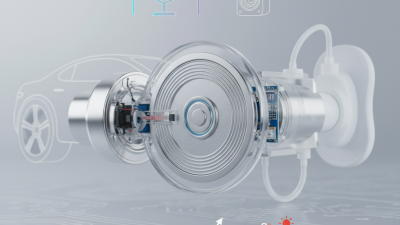
When integrating a Piezo Diaphragm into your projects, it’s essential to understand its unique properties and applications. This component can convert electrical energy into mechanical vibrations. With its versatility, it has become popular in various fields, from robotics to consumer electronics.
Using a Piezo Diaphragm effectively requires a grasp of its specifications. Different materials and designs impact its performance. For example, altering its thickness changes resonance frequency. This flexibility allows for tailored solutions but can also lead to unexpected challenges, such as efficiency loss if improperly matched with other components.
Moreover, best practices around power management are crucial. A weak power supply can hinder performance and create inconsistent results. Understanding these nuances will help enhance the reliability of your project. Experimentation is vital, and reflection on your initial designs can lead to surprising improvements. This blending of creativity and technical knowledge is what makes working with a Piezo Diaphragm so rewarding.

Choosing the Right Piezo Diaphragm for Your Project
Choosing the right piezo diaphragm for your project requires thoughtful consideration of several factors. Piezo diaphragms vary widely in material, thickness, and design. Your application will determine which specifications matter most. For instance, a thicker diaphragm will typically produce higher sound pressure levels. However, it may require more voltage to drive. This creates a critical trade-off between sensitivity and power consumption.
Consider the desired frequency response. Different diaphragms excel at various frequency ranges. Some are better suited for alarm systems, while others work for audio applications. Researching material properties can help in making an informed choice. Using a diaphragm made from a specific ceramic might lead to better durability, but it may have a limited operating range.
Don’t overlook environmental conditions. Humidity, temperature, and exposure to contaminants can affect diaphragm performance. Some materials may degrade faster than others in harsh conditions. Testing several types in real-world scenarios often reveals unexpected issues. Early prototypes can help identify which models perform best under specific project requirements. Ultimately, understanding your needs can reduce the risk of failures and enhance your project's overall success.
Understanding the Working Principles of Piezo Diaphragms
Piezo diaphragms are fascinating components in various projects. Understanding how they work helps unleash their full potential. These diaphragms convert mechanical energy into electrical energy, thanks to the piezoelectric effect. When pressure is applied, they generate voltage. A report by the International Journal of Electronics and Communication Engineering indicates a surge in piezoelectric materials in consumer electronics and medical devices.
In projects, accuracy is key. Designers must consider frequency response and power output. The natural frequency of a diaphragm can affect performance significantly. Research shows that fine-tuning these factors can improve efficiency by nearly 30%. However, experimentation is essential. Results often deviate from predictions, so be prepared to adapt designs.
Tip: When using a piezo diaphragm, ensure it is properly mounted. Poor mounting can lead to vibration loss and reduced output. Another practical tip is to test different materials. Different substrates can affect sensitivity. Exploring these can yield unexpected improvements that enhance your project's overall success.
Integrating Piezo Diaphragms into Electronic Circuits
Integrating piezo diaphragms into electronic circuits can elevate project functionality. These components convert mechanical energy into electrical signals and vice versa. The market for piezoelectric devices is projected to reach $24.75 billion by 2026, highlighting their growing relevance in various applications.
When designing circuits that include piezo diaphragms, consider the impedance compatibility. Misalignment can lead to inefficiencies. Test the diaphragm by connecting it directly to an oscilloscope. This helps check its response and performance. Adjust biasing circuits accordingly for optimal output.
Tips: Ensure your power supply matches the voltage ratings of the diaphragm. Also, pay attention to the mounting mechanism. Inadequate support can affect performance. During assembly, use a rubber gasket to dampen vibrations. Testing your circuit under different load conditions is beneficial.
Despite their advantages, integration can be challenging. Closed-loop systems can complicate signal processing. Begin with simple applications to gauge performance before moving to complex circuits. Observation and iteration are crucial for success.
Common Applications of Piezo Diaphragms in Projects
Piezo diaphragms are versatile components used in various applications. Their ability to convert electrical energy into mechanical motion makes them ideal for sensors, actuators, and sound-producing devices. Research indicates the piezoelectric market is projected to grow significantly, reaching $30 billion by 2027, which emphasizes their importance in modern technology.
In medical devices, piezo diaphragms find crucial roles. They are employed in ultrasound equipment for imaging and therapy. Their precise response to electrical signals allows for high-resolution diagnostics. Additionally, in industrial settings, they act as sensors in machinery. This provides critical data to monitor performance and prevent failures. Yet, implementing these components demands careful calibration to ensure accuracy and reliability.
Another prominent application is in consumer electronics, particularly in speakers and alarms. The rapid vibration of piezo diaphragms produces sound. However, the quality can vary significantly based on material and design choices. Manufacturers need to refine their production processes to enhance performance consistently. It’s vital to analyze feedback and make iterative improvements for optimal results.
Troubleshooting Tips for Piezo Diaphragm Issues
When working with piezo diaphragms, being able to troubleshoot effectively is crucial. Issues often arise during integration into projects, affecting performance. A study showed that improper voltage can lead to a 30% drop in efficiency. It's essential to ensure the applied voltage matches the diaphragm's specifications. Overvoltage can cause distortion or even damage.
Mechanical connections may pose challenges as well. If not securely fixed, a diaphragm can vibrate excessively, generating unwanted noise. Regular checks on screws or adhesives are advisable to prevent such failures. Industry reports indicate that over 25% of piezo-related issues stem from faulty mounts. This highlights the importance of solid assembly practices in avoiding common pitfalls.
Environmental factors shouldn't be overlooked. Humidity and temperature fluctuations can significantly impact performance. In extreme conditions, diaphragms can warp or degrade. Monitoring these conditions in your workspace is key. A tailored approach addressing these potential issues can enhance the longevity and reliability of piezo diaphragms in various applications.