






Piezoelectric Buzzers: What They Are and How to Choose the Right One
1.Piezoelectric Buzzer Definition
2.Piezoelectric Buzzer Working Principle
3.Applications of the Piezoelectric Buzzers
4.How to Select the Suitable Piezoelectric Buzzer for yourself
5.Conclusion
Piezoelectric Buzzer Definition
A piezoelectric buzzer is an electro-acoustic device that generates sound by the mechanical vibration of a piezoelectric ceramic device. When an electrical signal is applied to the piezo element, the piezoelectric element bends or deforms slightly and generates audible sound waves. Piezoelectric Buzzers have been widely adopted in electronic devices due to its compact built, energy efficiency and cleaning sound at different frequency. It is because their simple structure and wide operation range that make them become one of the most common audio indicators nowadays.
A piezoelectric buzzer generally has one piezoelectric ceramic disc attached on one metal plate; piezoelectric ceramic disc clutched between the metal and the housing; and the electrical terminals. The ceramic material is the active layer that responds to the applied electrical signal and the metal plate aids in increasing and stabilizing the vibration. Many of the piezoelectric buzzers also are made as sealed items for greater durability in outdoor or industrial applications.
Piezoelectric Buzzer Working Principle
The operation principle of piezoelectric buzzer is inverse piezoelectric effect. When voltage is applied to a piezoelectric ceramic material, while the electrical charge is supplied the shape of the material changes minutely. Although this deformation is very small it is sufficient to cause mechanical vibration. Once the voltage is changed very quickly, the vibration becomes continuous and results in a sound wave frequency.
A typical piezoelectric buzzer will take a simple square-wave type signal. The frequency of the electrical signal controls the pitch of the sound, while the level of voltage has an effect on the sound pressure level. Most piezoelectric buzzers operate at their resonance frequency, which is the frequency which causes the greatest vibration amplitude. Some of piezoelectric buzzers come with a drive circuit already built in, so called self-drive piezo buzzers which can run them directly off a DC power source. Others have the requirement to an external driver in others and are called external driven buzzers. The principle of Piezoelectric Buzzer is easy, but very effective. The piezo element is fast reacting, low heat and very low current consumption.
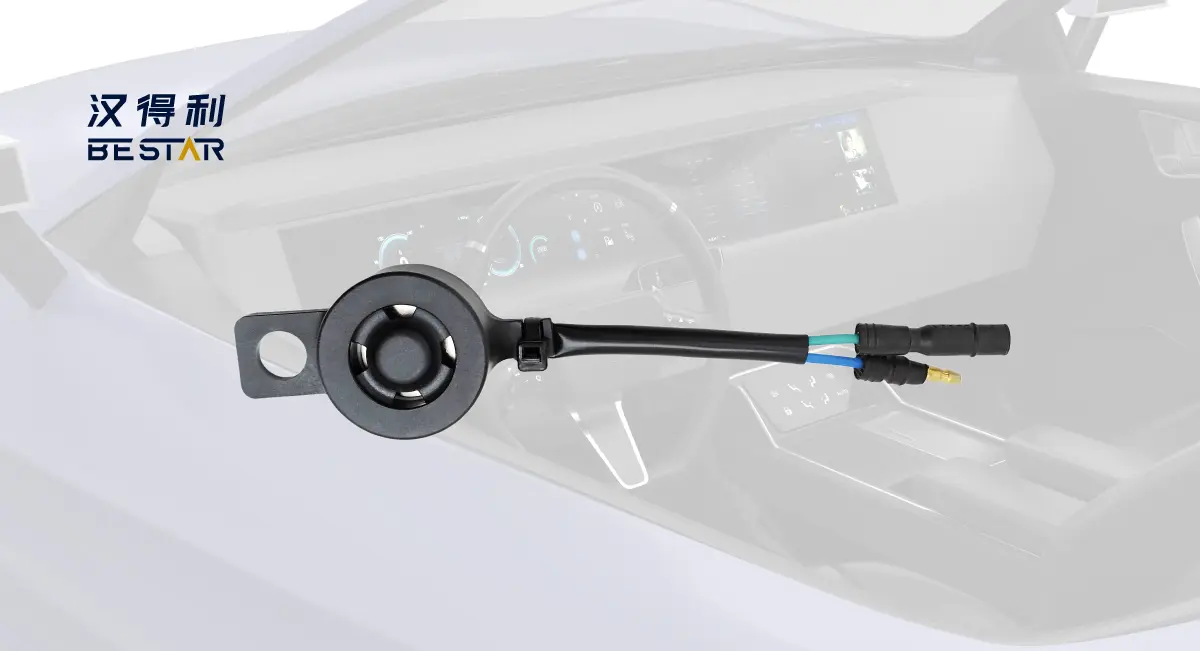
Applications of the Piezoelectric Buzzers
Piezoelectric buzzers find a wide variety of applications in many industries because of their versatility, compact design and clear sound output. Some of the most popular areas of application are given below:
1. Consumer Electronics
Can be found in home appliances like microwave, washing machines, induction cookers, oven and refrigerator etc. They serve as alert calls, status reminders or indicator of counts down. They are small in size so that they can easily be integrated into small consumer products.
2. Automotive Electronics
Piezoelectric buzzers can be used in warning of seat belt checks remind, parking sensor feedback and low coax pull snake feet. Their disabilities and high sound penetration make them meet both pet requirements of internal cabins and external modules. Some automotive grade piezoelectric buzzers are also designed to work in wide temperature range and harsh environmental condition.
3. Industrial Equipment
Industrial control panels and automation systems incorporate piezoelectric buzzers to give audible real-time warnings. These alarms could be of machine start-up, safety warnings, abnormal situation or emergency notification. Piezoelectric buzzer is also applied to measurement devices, testing equipment and factory monitoring systems.
4. Medical Devices
In medical applications or any applications that need good audible signals, piezeo buzzers are often used. Such as infusion pumps, thermometers, patient monitoring systems, blood pressure monitors and portable diagnostic tools. Their clean and sharp tones are ensuring users receive instant feedback in a critical environment.
5. Security and Safety Systems
Piezo buzzers are used in alarms and detectors such as smoke alarms, carbon monoxide alarms, gas detectors and personal safety. These applications call for high sound pressure and rapid start-up response both of which piezo buzzers can deliver very well.
6. IoT and Smart Devices
As IoT devices continue to increase in quantity, piezo buzzers have a significant role in user interaction and user alert functions. They are built into smart doorbells, smart locks, wireless sensors and other connected devices. Their ultra-low power consumption is useful for keeping long battery life in these products.
How to Select the Suitable Piezoelectric Buzzer for yourself
Choosing a suitable piezoelectric buzzer is performed based on the performance specification as well as how the device is to be utilized. The following are some major criteria to consider below:
1. Drive Type
Self-drive buzzer: Can be used easily, only need to provide DC power supply, fixed tone. Can be used for simple alert functions.
External-drive buzzer: Requires driver circuit, it allows the flexible control of frequency, it is for products in which control of tone or sound pattern requires customization.
2. Duty Voltage/Rated Voltage/Operating Voltage
Different piezoelectric buzzers require assistive of different amounts of voltage. Often higher voltage leads to higher sound pressure. Buzzers on any circuit One of the reasons designers must select a buzzer is to choose a buzzer that is compatible with the circuit available voltage.
3. Resonant Frequency
The resonant frequency defines the frequency of the sound. Common frequencies include:
2 kHz-4 kHz: Most commonly used for general alerts.
Above 5 kHz : Suitable for small size devices or special tones.
Choosing the right frequency according to the user's hearing range, the environment of use and the loudness required by the user.
4. Sound Pressure Level (SPL)
SPL is the measure of how loud the buzzer emitted sounds purported to be. More typically, it is measured at 10 cm or 30 cm.
Outdoor devices usually need higher SPL and lower SPL to be used in indoor or quiet situation.
5. Size and Mounting Type
Common mounting styles are: Through-hole (THT), Surface mount (SMD) ,Wire-lead types(The style of mounting has to match the style of manufacturing for the final product.)
6. Power Consumption
Battery powered devices demand buzzers that have a minimum current load. Piezo buzzers are efficient by nature and it varies with specific models.
7. Environmental Requirements
For the harsh environments select buzzers, you can select the pizeo buzzer with high resistance to high temperature, waterproof structure or dustproof structure, vibration and shocking resistance. Automotive & Industrial applications must specialise models which comply with these conditions.
Selecting according to use will guarantee the device will meet performance expectations. If you have some problems with selecting the right pizeo buzzer, you can contact us for help.
Conclusion
Piezoelectric buzzer is a very reliable and energy-efficient sound generating device, and is an important component of many of today's electronic systems. The working principle is simple, but its performance is good enough to drive the application in consumer electronics, automotive systems, industrial equipment, medical equipment and IoT products. By understanding how it works and knowing how to evaluate some parameters like resonant frequency, sound pressure level, drive type, voltage and environmental requirements, you can select the most appropriate piezoelectric buzzer for their application.
The piezoelectric buzzers will continue to be a critical part of audible alerts and notifications as technology continues to advance. The combination of their low power consumption and long service life along with the stable performance of LED lighting means that they will continue to support the traditional and emerging electronic designs.