






What is a Buzzer: Development, Types & Applications?
1.What is Buzzer?
2.Development of Buzzers
3.Types of Buzzers
4.Applications of Buzzers
5.Conclusion
What is Buzzer?
Buzzer is an electro-acoustic transducer that converts electrical signals into sound. It is normally employed as an indicator or alarm in many electronic systems. Its sound made (a tone, beep or continuous noise) will indicate certain events or conditions to the users.
Buzzers are small in size, low weight, and low energy consumption. Because of these properties, they are extensively used in household appliances and where small loudspeakers are required but there is no space for loudspeakers to create an audible alert signal.
In principle, a buzzer is an electrical signal converted into a sound that people can easily hear. Due to its easy-to-operate principle and robust reliability, it is a perfect sound-generating component for consumer electronics and automotive electronics.
Development of Buzzers
Buzzers started in the early part of the 20th century with rather simple electromagnetic devices that could be used for creating mechanical sounds. These early buzzers operated by vibrating a metal diaphragm using an electromagnet. They were in most case, such as telephones and doorbells.
In the middle of the 20th century, electronics improved and piezoelectric materials were introduced. These materials develop mechanical vibration under the application of voltage. In the 1950s buzzers technology got a huge boost from the discovery of Lead Zirconate Titanate (PZT). PZT offers greater efficiency, louder sound and a more compact size compared to previous electromagnetic designs.
Piezoelectric buzzers became commonplace because they are easy to incorporate on printed circuit boards due to lightweight and durable through the 1970s and 1980s . This enabled buzzers to find their way into many millions of devices - from microwave ovens to wristwatches.
Today, buzzers still get smaller, louder and have reduced power consumption and resist rugged environments. Modern buzzers can be subjected to extreme temperatures and vibrations, making them perfect for cars, airplanes and outdoor use.
Types of Buzzers
According to the way of working, buzzer is divided into two types: electromagnetic buzzer and piezoelectric buzzer.
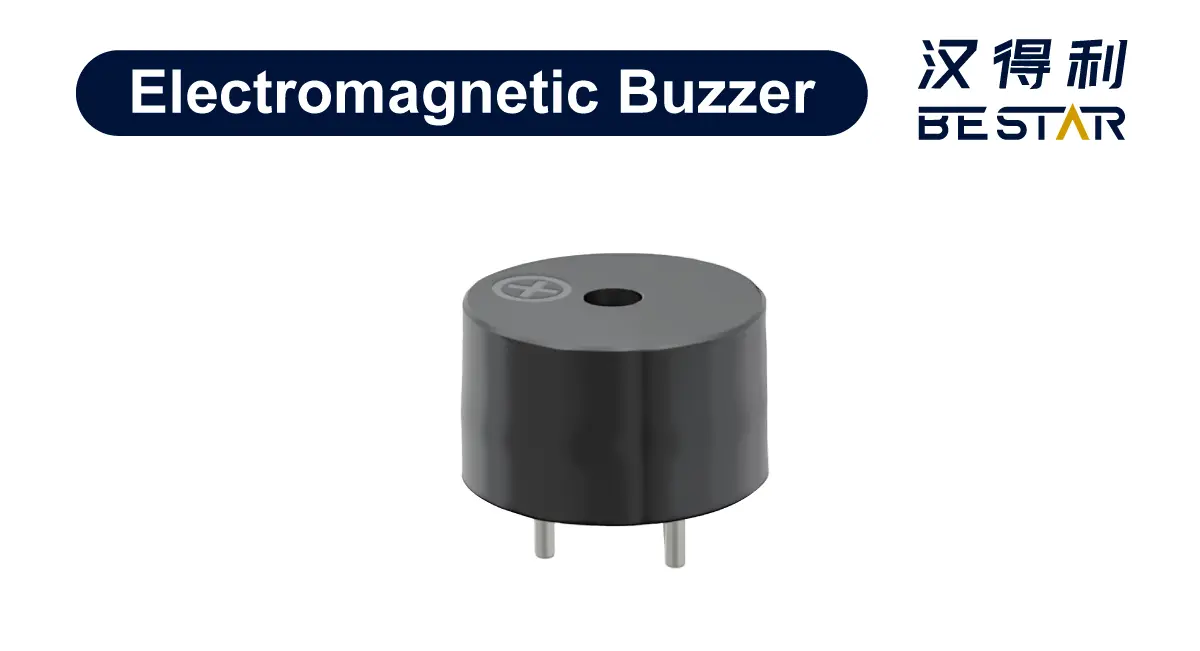
1. Electromagnetic Buzzer
Electromagnetic buzzers have a coil, a magnet and a vibrating diaphragm. When a current flows through the coil, this creates a magnetic field which causes the diaphragm to be moved creating sound. The design is oriented towards low-frequency output, normally in the 1-4 kHz region, which to the human ear is the most audible. Electromagnetic buzzers are widely used in alarm clocks, toys and simple electronic devices. Usually we provide 12v electromagnetic buzzer.
2. Piezoelectric Buzzer
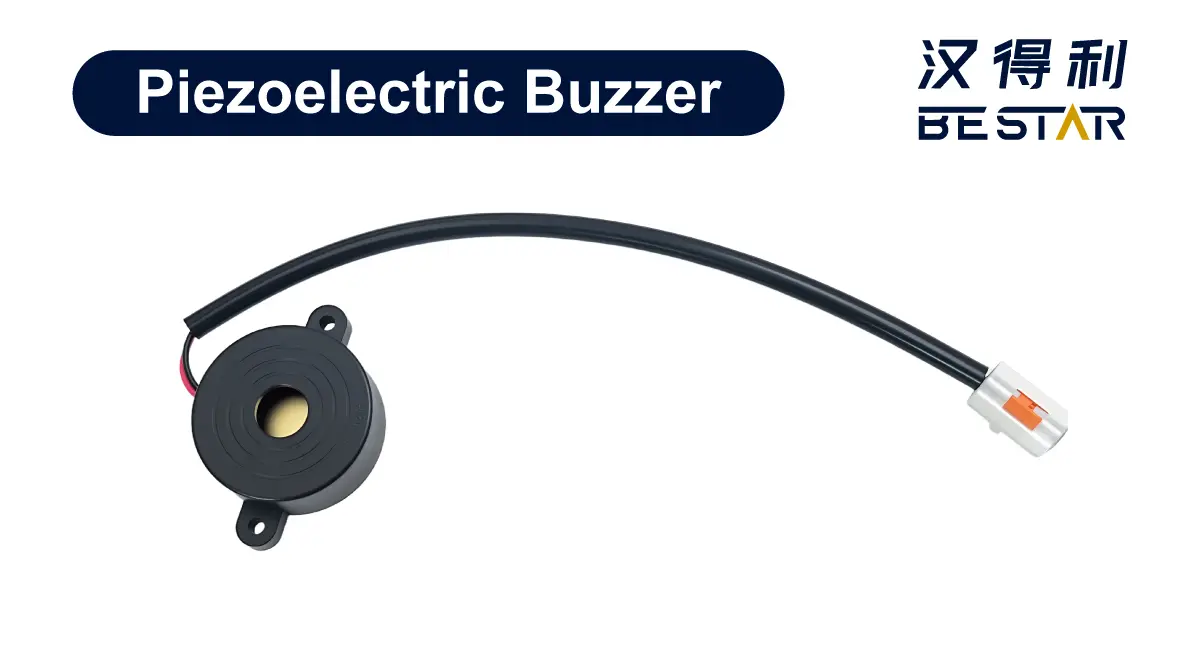
Piezoelectric buzzers are based on a piezoelectric ceramic component, typically made of PZT materials. Piezoelectric Buzzer working principle is when voltage applied, the ceramic exhibits deformation, creating mechanical vibrations that translate into sound. This device produces high-frequency beeps, generally in the range of 3-10 kHz, making them well-suited for warning tones and electronic alerts.
Piezoelectric buzzer is extensively applied in automotive warning systems, medical instruments, industrial controls and consumer electronics.
Another classification to be done for buzzers will be on the basis of the driving technique: Active Buzzers and Passive Buzzers
3.Active Buzzer
Active buzzers have a built-in oscillator. They are capable of generating sound when a DC voltage is supplied to it. The driving circuit is very simple to use, and they can be applied easily in the systems with limited control ability.
4.Passive Buzzer
The passive buzzers do not have an oscillator. They need an external output signal (usually a square wave) , so that users can do more versatile control of tone and frequency, which is perfect for applications that need to have variable sound effects.
While passive buzzers find their usage in smart devices, active buzzers find more uses in alarms and home appliances.
Applications of Buzzers
Buzzers are multifunctional and can be used in a huge number of industries. The following are some of the most common applications.
Consumer Electronics
Buzzers are usually used in microwave ovens, washing machines, air conditioners and electronic toys. They serve as indicators to inform the users that a process is done or that a button has been clicked.
Automotive Industry
In vehicles, buzzers are used to give safety and operational warnings. They are used in systems like seat-belt reminders, parking sensors, reversing alarms and dashboard warning lights.
Security and Safety Devices
Intrusion detectors, fire alarm systems and gas detectors all rely on buzzers. On the other hand, when there is danger, the piezoelectric alarm buzzer has a high frequency and a high concentration of issuing sound, which can attract attention in a very short time, so as to ensure safety.
Computers and Office Equipment
Small buzzers are still used for error codes or start-up signals for older PCs or modern embedded systems. They are also used in the coatings of control panels on photocopiers, printers, office equipment and other products to inform users about the operation state or error.
Conclusion
The buzzer is absolutely critical to modern electronic systems. Its journey - from early electromagnetic designs to today's compact piezoelectric models. Buzzers provide a simple, dependable way to communicate through sound - alerting, warning, and guiding the user in an infinite number of everyday applications. As the demand for smarter, smaller and more efficient right articles is growing, buzzers will continue to be indispensable in electronic acoustics.
In short, the buzzer evolves in step with technology to make our devices safer, smarter and more responsive to our needs.
Looking for the suitable Piezoelectric Buzzer&Electromagnetic Buzzer solutions? Contact our team of engineers right now for advice and a quote.