






When New Energy Vehicles Are No Longer Silent: How Can Safety Be “Heard”?
In November, China’s new energy vehicle (NEV) market experienced another surge in sales. BYD’s monthly sales approached 500,000 units, Geely New Energy exceeded 187,000 units, and Huawei’s AITO brand surpassed the 80,000 mark for the first time. New players such as Leapmotor and Xiaomi also posted impressive results.
Globally, annual NEV sales are projected to exceed 20 million units, a year-on-year increase of around 25%. Entering 2025, the electrification wave continues to gain momentum. Yet as more and more electric vehicles flow into streets and neighborhoods, a crucial question for pedestrian safety is emerging: How can these nearly silent vehicles be clearly perceived by pedestrians—especially by people with visual impairments? Behind this major shift in mobility lies a seemingly small but vital safety technology, quietly protecting everyone on the road.
Soaring Sales, Hidden Risks Behind the Silence
In November 2025, China’s NEV market displayed explosive growth. Both traditional automakers and new brands delivered strong sales performance, while the global market also increased rapidly. However, the surge in NEV adoption has introduced a new safety concern: these vehicles are almost silent when traveling at low speeds. Studies show that electric and hybrid vehicles are about 40% more likely to be involved in accidents at low speeds compared with traditional fuel vehicles.
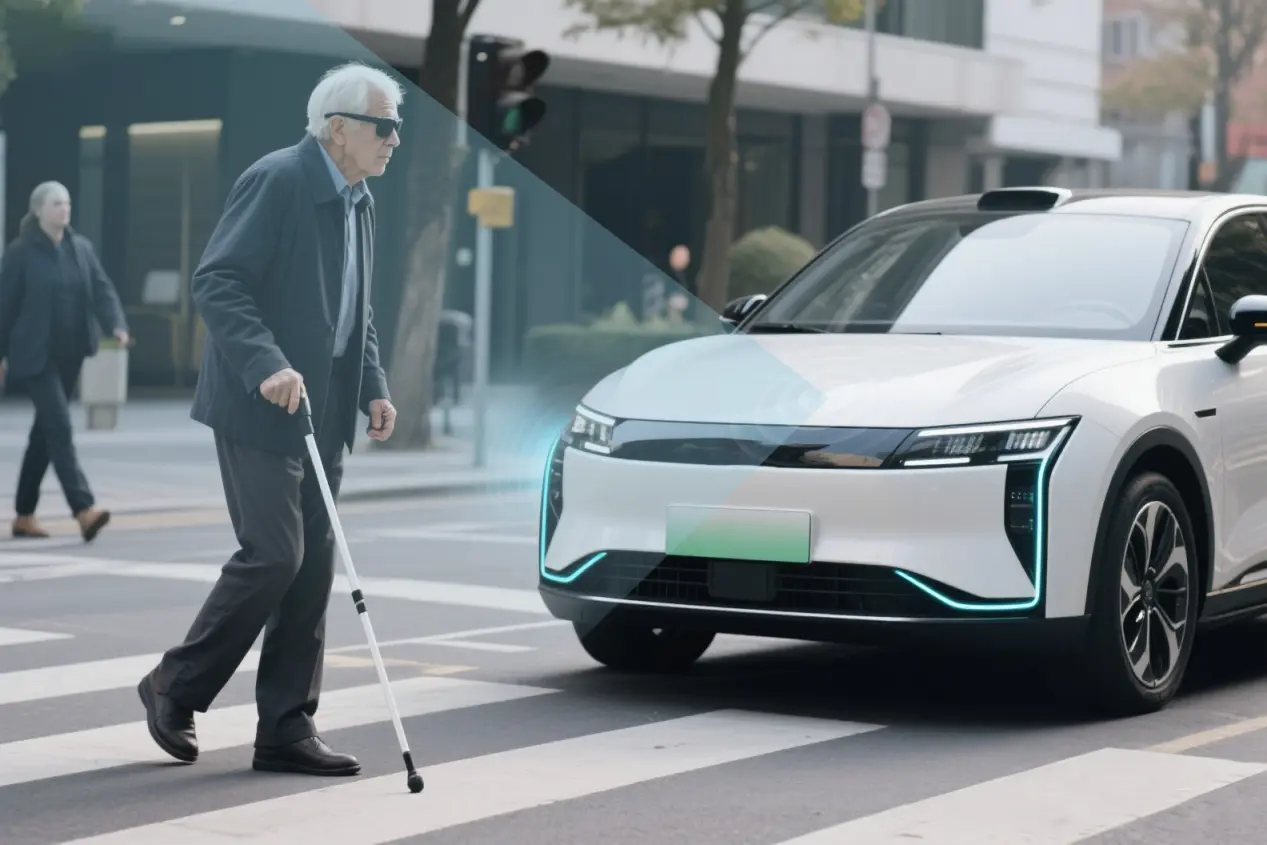
This issue disproportionately affects blind and visually impaired individuals, the elderly, and others who rely heavily on auditory cues to assess vehicle movement. In residential areas, parking lots, and other low-speed environments, the “silence” of electric vehicles increases the risk of pedestrian collisions.
Regulations Enforced: AVAS Becomes a Mandatory Requirement
To address this safety hazard, China has implemented mandatory standards such as the Safety Specifications for Motor Vehicle Operation (GB 7258-2017), requiring pure electric and plug-in hybrid vehicles to emit an audible warning when traveling below 20 km/h. The subsequent Audible Warning System for Electric Vehicles (GB/T 37153-2018) further specifies that:
The sound must be continuous,The pitch must reflect changes in vehicle speed,The sound level must not fall below 56 dB
A balance must be maintained between pedestrian alert effectiveness and noise control
During the establishment of this regulatory framework, BESTAR served as a major initiator in the development of China’s national AVAS standard, participating throughout the entire standard-setting process and demonstrating strong technological leadership in the industry.
Technology Safeguards Safety—Making Silence Audible
As the primary drafting unit of the national standard, BESTAR spent six years independently developing its AVAS system, mastering core technologies ranging from acoustic design to control algorithms. The system is engineered for excellent environmental adaptability and remains stable across varying climates and road conditions.
Through precise acoustic structures and advanced audio modulation techniques, the AVAS ensures its warning sound can penetrate ambient noise clearly. Within the 0–20 km/h low-speed range, it provides a directionally identifiable alert that significantly enhances pedestrian awareness and reduces the risk of vehicle-pedestrian collisions.
Electrification Accelerates, the Mission of Safety Continues
As of November 2025, China’s NEV penetration rate exceeded 50%—meaning one out of every two new cars sold is electric. As electrification continues its rapid advance, BESTAR’s AVAS system will remain committed to its safety mission—quietly safeguarding the road while enabling technology and human-centered care to progress hand in hand.