2026 Top Piezo Amplifier Trends and Innovations to Watch Out For?
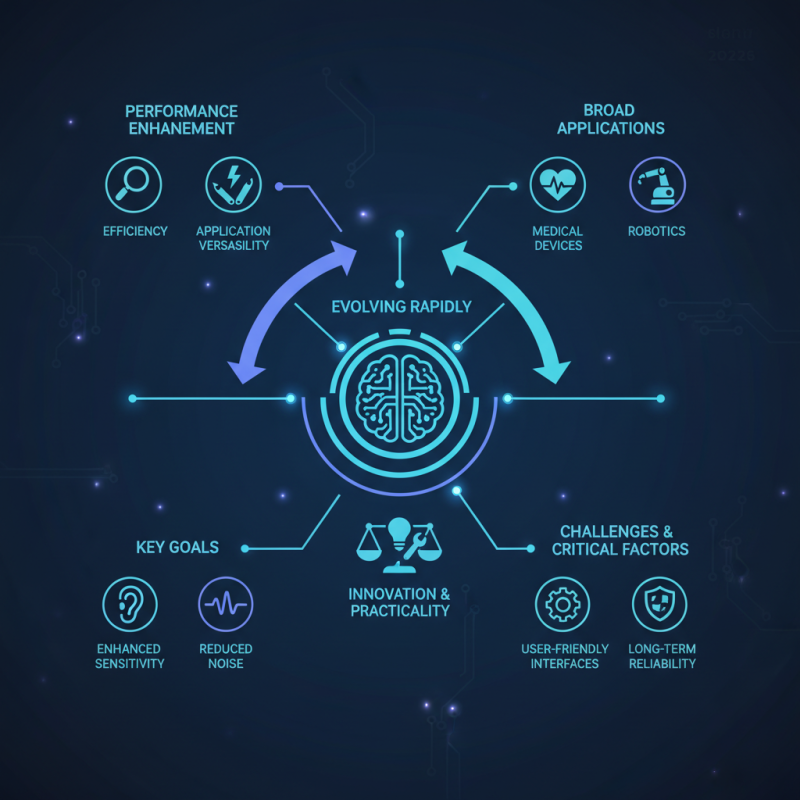
The world of Piezo Amplifier technology is evolving rapidly. Innovations are emerging that significantly enhance performance and application versatility. This year, industry leaders predict substantial trends that will shape the future of this vital technology.
Many companies are investing in research to optimize Piezo Amplifier designs. These advancements aim to improve efficiency and functionality in various sectors. From medical devices to robotics, the applications are broad and compelling. Enhanced sensitivity and reduced noise levels are among the key goals.
While we see progress, challenges remain. The need for integration and user-friendly interfaces continues to be a hurdle. Additionally, long-term reliability is crucial in many applications. Striking a balance between innovation and practicality is essential. As we delve into 2026 trends, we must critically assess both achievements and areas for improvement in Piezo Amplifier technology.
Emerging Technologies Shaping Piezo Amplifier Development in 2026
The landscape of piezo amplifier technology is evolving rapidly. Emerging technologies are playing a pivotal role in shaping developments for 2026. New materials, such as ultra-thin piezoelectric films, are enhancing efficiency and response times. These advancements can significantly reduce the size of devices while maintaining performance. According to a recent industry report by Research and Markets, the global piezoelectric market is projected to reach $2.75 billion by 2026, driven by innovations in amplifier technology.
Collaboration among researchers and industry professionals is crucial. Universities are increasingly partnering with companies to develop cutting-edge solutions. One notable change is the integration of AI algorithms in piezo amplifiers. These algorithms improve signal processing, making devices smarter and more responsive. However, the adaptation costs can burden smaller firms. Balancing innovation with financial feasibility remains a concern.
Given these trends, companies must stay ahead of the curve. Transitioning to more eco-friendly manufacturing processes is also gaining traction. Sustainability goals are influencing decisions in material selection and production methods. These factors complicate the development landscape for piezo amplifiers. The future may hold both opportunities and challenges as the industry navigates these complex dynamics.
Key Innovations in Piezoelectric Material Science for Amplifiers
The field of piezoelectric materials is undergoing significant transformation. Innovations in this area shape the future of piezo amplifiers. As per a recent report from MarketsandMarkets, the global piezoelectric materials market is expected to grow from $1.23 billion in 2023 to $1.76 billion by 2028. This rapid growth reflects the increasing demand for high-efficiency amplifiers in various applications.
Researchers and engineers focus on enhancing piezoelectric properties by developing new composites. These composites integrate polymers with ceramics. For instance, polyvinylidene fluoride (PVDF) is gaining traction due to its flexible characteristics. It ensures better performance in diverse environments. However, challenges remain in the consistency of material performance. Achieving uniformity across batches is crucial for reliability in applications like sensors and actuators.
Another trend involves the exploration of nanotechnology. The use of nanostructured materials is promising. They show improved piezoelectric response and energy conversion efficiency. Yet, this area demands rigorous testing protocols. As we adopt advanced materials, the unpredictable behavior of nanostructures must be understood thoroughly. Balancing innovation with reliability will be vital for manufacturers.
2026 Top Piezo Amplifier Trends and Innovations
Trends in Miniaturization of Piezo Amplifiers for Compact Devices
The trend toward miniaturization in piezo amplifiers is reshaping how compact devices operate. Recent industry reports indicate that the piezoelectric actuator market is expected to grow by 21.8% between 2023 and 2028. Innovators are finding ways to reduce the size of these amplifiers, catering to the ever-increasing demand for smaller electronics. In 2026, this trend will likely lead to even more refined products, enabling devices like smartphones and medical instruments to integrate advanced functionalities without sacrificing space.
As piezo amplifiers shrink, their performance must also enhance. Engineers are exploring materials that offer greater efficiency and durability. However, challenges remain. Smaller components sometimes lead to increased sensitivity to environmental factors, which can affect reliability. Studies show that while miniaturization enables innovation, it can also introduce complexities in design and thermal management. The quest for the ideal balance continues, highlighting the importance of adhering to strict performance standards while pursuing compactness.
Smart Features in Piezo Amplifiers: Integration with IoT and AI
The integration of smart features in piezo amplifiers is reshaping industries. With IoT, real-time data processing becomes possible. According to a recent industry report, the market for IoT in automation is expected to grow at a compound annual growth rate (CAGR) of 25% through 2026. This presents tremendous opportunities for piezo technology.
Artificial intelligence (AI) enhances the functionality of piezo amplifiers. By implementing AI algorithms, these devices can learn from environmental changes. This allows for adaptive performance and improved responsiveness. Research shows that AI integration can reduce energy consumption by up to 30%. However, the complexity of these systems can introduce challenges. Installation and maintenance may require specialized knowledge.
Furthermore, the data processing and analytics capabilities of IoT-enabled amplifiers raise privacy concerns. Manufacturers must ensure data security while dealing with sensitive information. Balancing innovation and responsibility is crucial in this evolving landscape. The convergence of smart technology with piezo amplifiers will likely redefine industry standards. Continued research and development are needed to address these challenges effectively.
Sustainability Trends Influencing Piezo Amplifier Manufacturing in 2026
In 2026, sustainability is a key focus in piezo amplifier manufacturing. Companies are increasingly prioritizing eco-friendly materials and processes. These changes aim to reduce waste and energy consumption. Manufacturers are exploring biodegradable materials. This shift reflects a commitment to environmental responsibility. However, the availability of suitable sustainable materials remains a challenge.
The move towards renewable energy sources is also influencing piezo technology. More manufacturers are integrating renewable energy in production. This not only minimizes carbon emissions but also enhances energy efficiency. However, the upfront costs of adopting such technologies can be high. Many manufacturers find it hard to justify these investments in a competitive market.
Adopting circular economy principles is another trend emerging in 2026. This involves designing products for longevity and recyclability. Companies are starting to implement take-back schemes. This allows them to reclaim old units for refurbishment or recycling. However, creating a fully circular system requires collaboration across the supply chain. Many companies are still navigating these complexities.
2026 Top Piezo Amplifier Trends and Innovations to Watch Out For
| Trend/Innovation |
Description |
Impact on Sustainability |
Expected Adoption Rate (%) |
| Energy Harvesting Techniques |
Integration of piezoelectric materials for harvesting energy from vibrations. |
Reduces dependency on traditional energy sources. |
65% |
| Miniaturization |
Development of smaller piezo amplifiers for compact applications. |
Less material usage leads to lower environmental impact. |
75% |
| Smart Amplifier Systems |
Self-tuning piezo amplifiers that adapt for optimal performance. |
Improves efficiency and reduces waste. |
60% |
| Biodegradable Materials |
Use of eco-friendly materials in amplifier construction. |
Significantly reduces environmental footprint. |
50% |
| Digital Control Systems |
Implementation of digital controls for flexibility and precision. |
Enhances performance and minimizes excess energy use. |
70% |