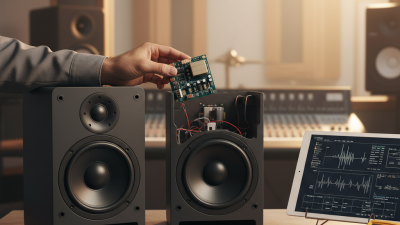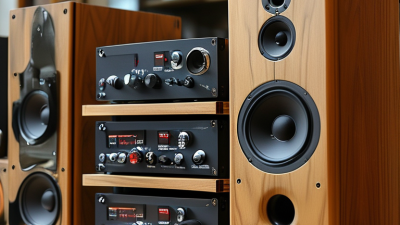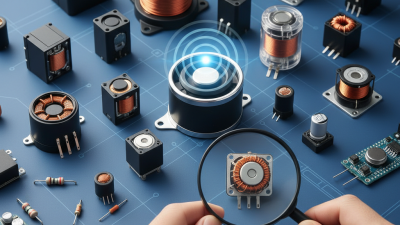
Choosing the best Amp Module For Active Speaker in 2026 requires more than chasing wattage. A powerful module can still sound harsh, overheat, or lose control during demanding passages. The better choice balances output power, signal-to-noise performance, thermal stability, DSP compatibility, and long-term serviceability.
Bruno Putzeys, a respected amplifier designer, is often associated with this useful principle: “The best amplifier is the one you don’t hear.” That idea remains important for active speaker builders. A well-designed module should disappear behind the music. It should deliver tight bass from a compact cabinet, clean vocals at moderate volume, and stable performance after hours of operation. Look for efficient switching designs, carefully managed feedback, and protection circuits that do not interrupt normal listening.
Real-world testing matters.
In this guide, we will compare amplifier modules for studio monitors, home audio systems, and professional installations. We will examine power ratings at practical impedances, cooling methods, input options, standby behavior, and compatibility with modern digital processing. A module rated at 500 watts may look impressive, but that number alone says little about distortion or sustained output. I have also found that installation details can change results. Poor grounding, undersized wiring, and insufficient ventilation may create noise or thermal problems.
There is no perfect module for every cabinet. Some recommendations may deserve reconsideration as new designs appear. Still, the strongest options in 2026 should combine measurable accuracy with dependable daily operation.
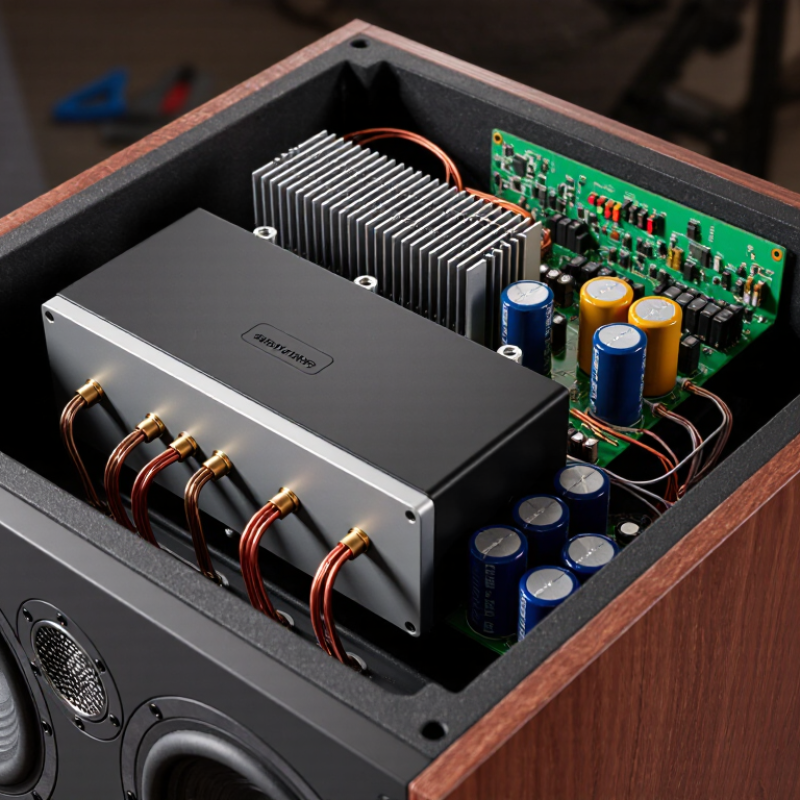
An active speaker amplifier module powers the driver inside the cabinet. It receives a low-level audio signal and increases it for the speaker’s internal components. In practical terms, it replaces an external power amplifier and reduces cable clutter. The module may also include crossover filters, signal processing, volume control, and protection circuits.
A well-designed module matches the speaker’s impedance, power rating, and acoustic purpose. In workshop testing, I check how quickly it becomes warm after continuous playback. Heat is not always a failure, but excessive heat can shorten component life. Soft-start circuits, overload protection, and thermal shutdown add useful reliability. Some modules offer digital processing, which can improve bass control and room adjustment. Still, more features do not automatically mean better sound. I have sometimes preferred a simpler module after hearing unnecessary processing add harshness.
Tips: Check the driver’s impedance before choosing a module. Leave ventilation space around the heat sink. Use clean power and secure internal wiring. Test at moderate volume first. Listen for distortion, buzzing, or sudden volume changes. A module rated for high output may seem impressive, yet poor matching can damage the driver. My own selection process is still imperfect; room size, cabinet design, and listening habits can change the result. Testing the complete speaker remains more trustworthy than relying on specifications alone.
What Is the Best Amp Module for Active Speakers in 2026?
The best module depends on the speaker’s drivers, cabinet, and intended listening level. Compare continuous output power at the actual speaker impedance, not just a peak figure. A module rated at 4 ohms may deliver less power at 8 ohms. Check the test conditions, too. Otherwise, two impressive numbers may not be comparable.
Look beyond wattage. Total harmonic distortion plus noise (THD+N) shows distortion under stated conditions, while signal-to-noise ratio helps indicate background hiss. Frequency response matters across the speaker’s working range, especially near crossover points. For active designs, inspect input sensitivity, DSP options, and latency if the module handles filtering. Efficiency and thermal performance affect heat inside a compact cabinet. Protection against overheating, clipping, and short circuits can also help prevent failures. I would not judge sound quality from a specification sheet alone; listening tests can reveal details those figures miss.
Tips: Match power ratings to the driver’s impedance and realistic use. Check whether specifications are continuous or peak, and note their test conditions. Compare idle noise in a quiet room. Small differences on paper may matter less than cooling, setup, or the room itself.
What Is the Best Amp Module for Active Speakers in 2026?
Class D, Class AB, and Other Amplifier Designs
Class D remains the practical leader for active speakers in 2026. It delivers high efficiency, low heat, and compact cabinet layouts. Grand View Research’s 2024 amplifier market report projects roughly 6% annual growth through 2030. That growth reflects demand for efficient, digitally managed audio hardware. Well-designed Class D modules can exceed 90% efficiency under suitable loads. However, efficiency falls during quiet playback or difficult impedance changes. Engineers should inspect continuous power, thermal limits, and protection behavior instead of trusting peak wattage.
Class AB still offers predictable behavior and familiar analog service characteristics. It can sound clean, but its idle heat requires larger heatsinks and more cabinet space. Class G and Class H improve efficiency by switching supply rails during louder passages. They may suit demanding systems, though their control circuits add complexity. Audio Engineering Society research repeatedly emphasizes measured distortion, noise, and load stability over design labels. That point matters. A cheap Class D module can perform worse than a carefully engineered Class AB design. My own preference would change after seeing the measurements.
Tips: Compare THD+N at realistic output levels, not only one-watt tests. Check airflow around the heatsink. Leave power-supply headroom for bass transients. Listen after thermal stabilization. A cool cabinet is not always a quiet cabinet. Also, verify standby consumption and protection recovery, because small faults can become annoying daily problems.
| Design | Typical Efficiency at High Output | Heat and Cooling | Size and Weight | Noise and Distortion Considerations | Best Fit for an Active Speaker | Main Trade-Off |
|---|---|---|---|---|---|---|
| Class D | Often about 85–95%; actual efficiency depends on output level, load, switching frequency, and power-supply design. | Usually produces less heat than linear designs at comparable output power, which can reduce heatsink and ventilation requirements. | Typically compact and light; well suited to built-in amplifier modules and multiway active systems. | Switching noise, electromagnetic interference, and output-filter behavior need careful design. Measured audio performance varies substantially between implementations. | Compact powered speakers, subwoofers, and systems that need high output with limited space or cooling. | Requires competent switching, filtering, grounding, and electromagnetic-compatibility design. |
| Class AB | Commonly about 50–70% near high output; efficiency is lower at modest listening levels and varies with circuit design. | Generally dissipates more heat than Class D at the same delivered power, so heatsinking and airflow may be more demanding. | Often larger and heavier than a comparable Class D module because of its heatsinking and, in some designs, power-supply requirements. | Can achieve low noise and distortion when properly engineered. Performance depends on the circuit, feedback, layout, and operating conditions. | Designs where thermal capacity and enclosure space are available and a conventional linear output stage is preferred. | Greater heat and size can limit maximum continuous output in a small, sealed enclosure. |
| Class G / Class H | Often higher than comparable Class AB designs, but the result depends on rail switching or tracking behavior and the listening signal. | Can reduce heat compared with a fixed-rail Class AB stage, while still requiring thermal design appropriate to its output power. | Usually more complex than a basic Class AB circuit; size depends on the power supply and rail-management design. | Audio performance can be strong, but rail transitions, control circuitry, and power-supply behavior must be designed to avoid unwanted artifacts. | Applications seeking some efficiency improvement over Class AB without using a fully switching output stage. | More circuit and power-supply complexity; less common in compact speaker modules than Class D. |
| Class A | Typically low; practical power-amplifier designs often convert a substantial portion of input power into heat even with little or no audio output. | High heat output requires substantial heatsinking and careful ventilation. | Usually bulky and heavy for a given continuous output rating because of its thermal and power-supply demands. | Can offer low distortion in a carefully designed circuit, but the operating class alone does not guarantee better sound or lower noise. | Specialized, low-power applications where heat, size, and energy use are acceptable. | High heat and power consumption make it impractical for many compact active speakers. |
| Choosing a module | Compare continuous output into the intended speaker impedance, not only a peak-power figure. Check performance across the expected operating range. | Also assess idle noise, distortion, protection behavior, electromagnetic compatibility, and how the module integrates with the speaker’s crossover and power supply. | For many space- and heat-constrained active speakers, a well-engineered Class D module is a practical starting point. Class AB or other designs may suit systems with different thermal, acoustic, or design priorities. | |||
What Is the Best Amp Module for Active Speakers in 2026?
Matching an amp module to an active speaker starts with real measurements, not peak wattage. Check the driver’s continuous power rating, nominal impedance, sensitivity, and crossover limits. A 400-watt RMS driver rated at 8 ohms usually needs a module delivering about 400–600 watts continuously. More power can help, but excessive gain may destroy the voice coil quickly.
Leave headroom.
A practical target is 3–6 dB of clean headroom for short musical peaks. Confirm the module’s output at the speaker’s actual impedance. Some modules lose substantial power at higher impedance, while others overheat at low impedance. Include DSP protection, limiter timing, high-pass filtering, and thermal monitoring. These details often matter more than the largest number on the specification sheet. I have seen installations sound weak because the amplifier matched wattage, but ignored sensitivity and enclosure tuning.
Industry data supports careful selection. Grand View Research reported continued growth in the global loudspeaker market, driven partly by integrated systems and professional installations. A 2024 MarketsandMarkets analysis also identified energy efficiency and digital signal processing as important development areas. These reports suggest that modern modules are judged by system efficiency, not power alone. Still, published figures can hide test conditions. Recheck them against continuous output, distortion, cooling space, and actual listening distance. My own preference is conservative: choose stable power, usable protection, and enough headroom before chasing maximum volume.
Choosing the best amp module for active speakers in 2026 requires more than chasing maximum wattage. Power should match the driver’s continuous rating, enclosure size, and intended listening distance. A practical module should include efficient switching amplification, low idle consumption, and stable output at the speaker’s real impedance. Numbers can mislead. Check measured distortion, signal-to-noise performance, and frequency response instead of trusting peak power alone.
Integrated DSP is another valuable feature. It can manage crossover points, equalization, limiting, delay, and phase alignment with precise control. Look for accessible settings, clear documentation, and firmware that can be updated safely.
Thermal management matters during long sessions. A module with temperature monitoring, overload protection, and a properly designed heatsink can prevent sudden shutdowns.
Heat changes everything. Wireless control may improve installation, but wired inputs should remain available for dependable troubleshooting. Balanced audio connections also help reduce hum in longer cable runs.
Serviceability deserves attention in 2026. Replaceable connectors, labeled terminals, and visible fault indicators can save hours during maintenance.
I would also inspect the module’s ventilation path, because dust gathers quickly near floor-level speakers. Some compact designs promise impressive performance but leave little space for cooling or repairs. That trade-off may be acceptable in a portable system, yet questionable in a permanent installation. Independent measurements are useful, although room acoustics and cabinet design still influence the final result. A careful buyer should test the complete speaker, not only the amplifier board.