How to Choose the Right High Pressure Sensors for Your Applications?
Choosing the right high pressure sensors is crucial for many industries, including automotive and aerospace. These sensors can significantly influence performance and safety. According to a recent industry report by TechNavio, the global high pressure sensors market is expected to grow by 5.4% annually through 2025. This statistic underlines the increasing demand for precise and reliable pressure measurements.
Industry expert Dr. Emma Carter states, "Selecting the optimal high pressure sensor can drastically improve operational efficiency." Her insights emphasize the importance of understanding application-specific requirements when choosing a sensor. Factors like measurement range, accuracy, and compatibility with existing systems must be considered.
Despite available data, many still struggle to choose the right sensor. Common pitfalls include overlooking the operating environment or failing to account for material compatibility. Selecting inappropriate sensors can lead to performance failures, increased costs, and safety hazards. With careful evaluation and understanding, businesses can avoid these issues and harness the full potential of high pressure sensors in their operations.
Understanding High Pressure Sensors and Their Importance
High pressure sensors play a crucial role in various industries, including oil and gas, manufacturing, and aerospace. These sensors help monitor and control systems under extreme pressure conditions. Understanding their importance can significantly impact operational efficiency and safety. A malfunctioning sensor might lead to equipment failure or unsafe environments, emphasizing the need for reliability.
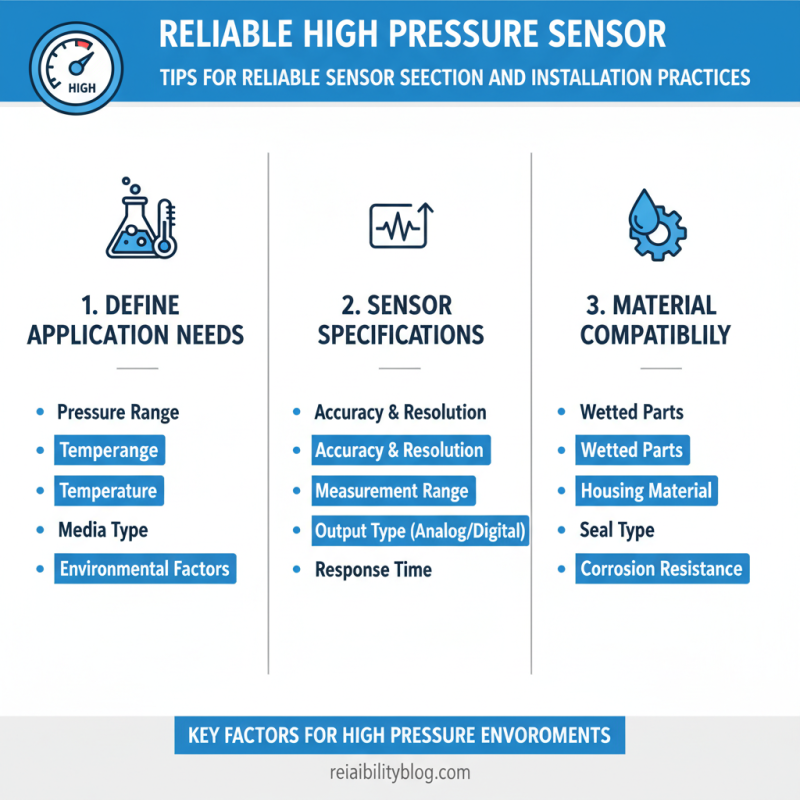
When selecting a high pressure sensor, consider factors like pressure range, accuracy, and response time. Not all sensors perform equally under different conditions. Some may underreport pressure, whereas others might be prone to failure in harsh environments. It’s vital to assess the specific needs of your application. For instance, a sensor’s material construction can affect its durability. This is particularly true in corrosive environments.
End-users should also reflect on maintenance requirements. Sensors that need frequent recalibration can complicate operations. Regular checks are necessary but can also increase costs and downtime. Finding a balance between reliability and cost-effectiveness is essential. Evaluate your processes thoroughly to make informed decisions that will benefit long-term operations.
How to Choose the Right High Pressure Sensors for Your Applications?
| Sensor Type |
Measurement Range (psi) |
Output Signal |
Material |
Application |
| Piezoelectric Sensor |
0 - 30,000 |
Voltage |
Stainless Steel |
Industrial Applications |
| Strain Gauge Sensor |
0 - 10,000 |
mV/V |
Aluminium |
Automotive Testing |
| MEMS Sensor |
0 - 5,000 |
Digital |
Silicon |
Consumer Electronics |
| Capacitive Sensor |
0 - 15,000 |
Current |
Plastic |
HVAC Systems |
| Optical Sensor |
0 - 20,000 |
Fiber Optic |
Glass |
Oil & Gas |
Evaluating the Different Types of High Pressure Sensors Available
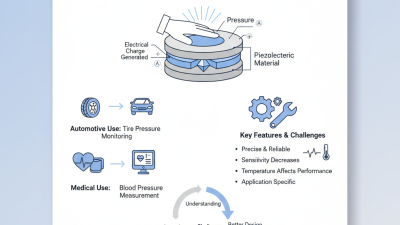
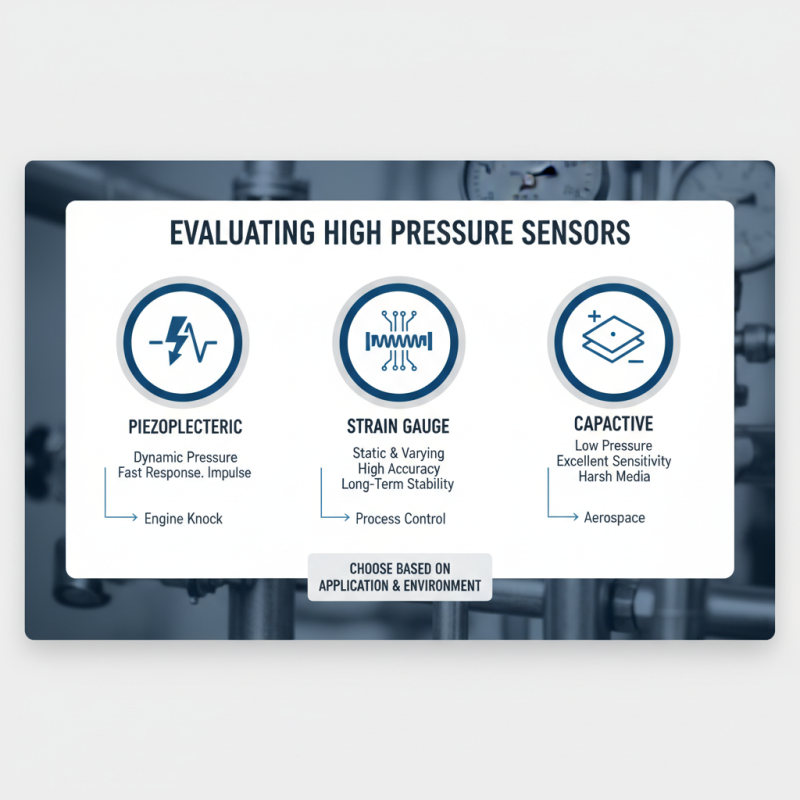
When evaluating high pressure sensors, it's essential to understand the various types available. Common options include piezoelectric, strain gauge, and capacitive sensors. Each type has unique attributes and applications. Piezoelectric sensors are often chosen for dynamic pressure measurements, while strain gauge sensors excel in static or varying conditions.
It's important to consider accuracy and range when selecting a sensor. For instance, you might need a sensor with a higher range for industrial applications. Conversely, a lower range may suffice for laboratory settings. Choosing a sensor that matches your specific requirements will yield the best results.
Keep in mind the installation environment. Sensors differ in durability and resistance to factors like temperature and humidity. High pressure applications often demand sensors that can withstand harsh conditions. Reflecting on these factors can significantly influence your overall efficiency and reliability in project outcomes.
Key Technical Specifications to Consider for High Pressure Sensors
When selecting high-pressure sensors, key technical specifications are essential. One must consider accuracy, range, and reliability.
Accuracy defines how closely your sensor readings match the actual pressure. A small error margin is crucial in critical applications, such as aerospace or medical devices. Range indicates the sensor's capability to measure pressure levels effectively.
Choose a sensor with a range that exceeds your maximum expected pressure, ensuring safety and functionality.
Reliability is paramount. Look for sensors that can withstand different environmental conditions, such as temperature and humidity variations.
Materials used in construction significantly affect durability and performance. Some sensors offer features like digital output and built-in diagnostics, enhancing reliability further.
Tip: Always assess the installation environment. Factors like vibrations and electromagnetic interference can impact sensor performance.
Another point to reflect on is calibration. Over time, sensors may drift from their original readings. Regular calibration checks should be part of your maintenance routine.
Tip: Consider sensors with self-calibrating features for ease of use. This can save time and resources in the long run.
Assessing Compatibility with Your Application's Environment
Choosing the right high pressure sensor involves understanding its compatibility with your specific environment. Pressure sensors operate in various conditions, including extreme temperatures and humidity levels. The materials used in sensors play a crucial role in their longevity and performance. For instance, stainless steel can withstand corrosive environments, while plastic may fail under high heat.
It's essential to evaluate the expected pressure ranges as well. Some sensors are designed for very high pressures, while others may not handle pressures above a certain threshold. If the sensor is placed in a dynamic setting with vibrations, look for features that enhance durability. Understanding the flow dynamics in your application can also influence sensor selection.
Consider the potential for dust, chemicals, or moisture exposure. A sensor may be reliable in clean conditions but fail in harsh environments. Reflect on the installation location, as accessibility for maintenance is critical. Sensors must not only be accurate but also easy to calibrate and service. Balancing these factors can be challenging but is necessary for optimal performance.
High Pressure Sensors Compatibility with Various Environments
This chart illustrates the compatibility of different high pressure sensors with various environmental factors such as temperature, humidity, and vibration. The data highlights how specific sensors perform under diverse conditions, aiding in selecting the right sensor for specific applications.