

Leave Your Message
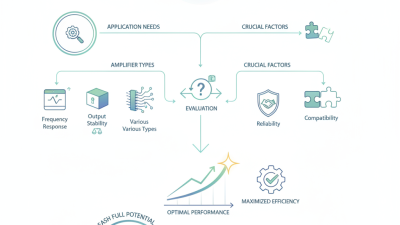
Choosing the right Piezo Amplifier supplier is rarely a simple price comparison. Global buyers must examine bandwidth, output voltage, current stability, noise performance, and technical support. A compact amplifier may look attractive on paper, yet fail when connected to a demanding ceramic actuator or precision positioning stage.
Professor Kenji Uchino, a respected authority in piezoelectric technology, offers a useful reminder: “The actuator and its driver must be treated as one system.” That principle matters in real procurement. A supplier should understand load capacitance, resonance behavior, thermal limits, and control-loop requirements. Otherwise, a promising specification can become an expensive laboratory lesson.
This guide evaluates seven Piezo Amplifier suppliers for international buyers. The comparison considers product range, engineering support, customization, documentation, delivery capability, and application experience. It also looks beyond impressive voltage figures. A 1,000-volt output may sound powerful, but it does not guarantee clean motion or reliable operation. Small details matter, such as connector quality, cooling design, calibration data, and protection against overloads.
Some judgments remain subjective. Supplier websites can be polished, while field performance is harder to verify. Buyers should request test reports, sample units, and realistic load evaluations before committing. That extra step may feel slow. It often prevents costly redesigns.
The suppliers below represent different strengths, from laboratory amplifiers and OEM modules to high-voltage systems for industrial automation. Their suitability depends on your actuator, control architecture, regional service needs, and compliance expectations. There is no universal winner. The best choice is the supplier that performs consistently inside your actual system.
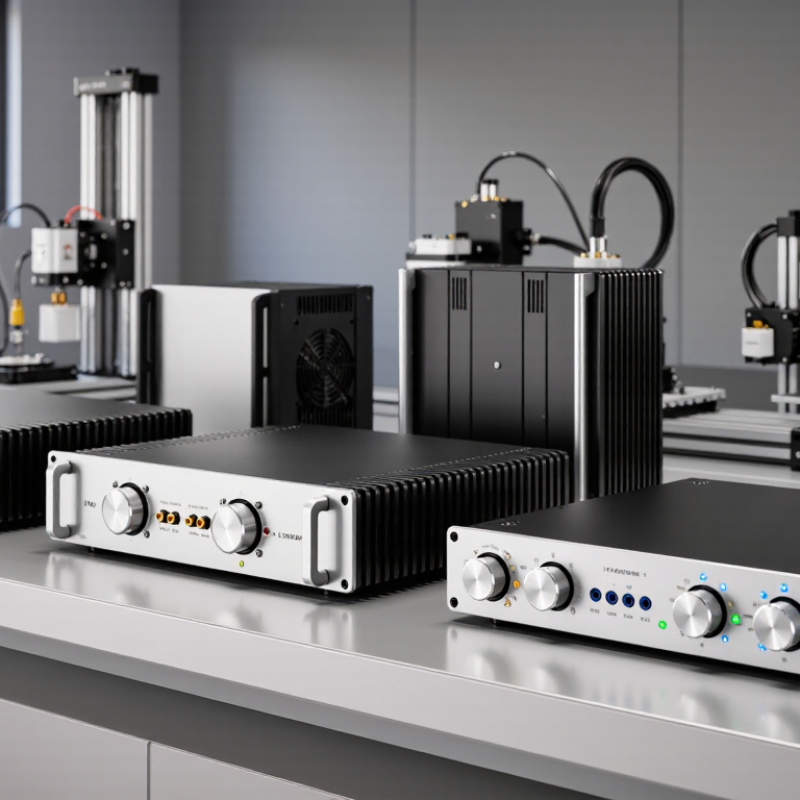
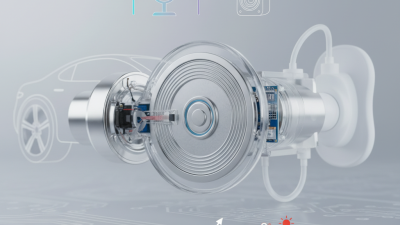
Piezo amplifiers are high-voltage drivers for piezoelectric actuators, sensors, and ultrasonic systems. A piezo element changes shape when voltage reaches its ceramic layers. It also generates charge when mechanical force bends it. The amplifier supplies controlled voltage, current, and frequency for that movement. Unlike ordinary audio amplifiers, it must handle capacitive loads. Output stability matters more than loudness.
A 2024 MarketsandMarkets report projects continued growth in the global piezoelectric devices market through 2029, supported by medical, industrial, automotive, and precision-positioning applications. Reported market estimates vary because analysts define devices differently. That inconsistency deserves attention. In practice, a 100-volt actuator may need only modest current at low frequency, but rapid motion can demand sharp current pulses. Poor matching creates ringing, heat, or slow settling. Closed-loop amplifiers use position feedback to correct errors, although sensors and cables can introduce noise.
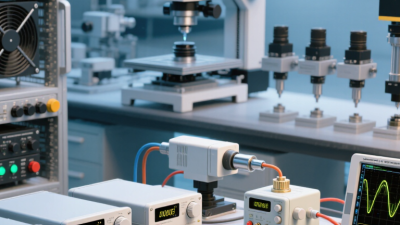
Tips: Check voltage range, peak current, bandwidth, and capacitive-load ratings before comparing suppliers. Ask for step-response graphs under your actual actuator load. IEC 61326-based electromagnetic compatibility testing can improve confidence in laboratory installations. Also inspect thermal data, output protection, and calibration records. A smaller amplifier may perform better than a larger one when its feedback control matches the actuator. I have seen specifications look impressive on paper, yet real motion remained disappointing. Test the complete cable-and-load system.
| Supplier Capability Profile | Amplifier Type | How It Works | Typical Output Function | Common Voltage Range | Typical Frequency Focus | Best-Fit Applications | Important Buyer Checks |
|---|---|---|---|---|---|---|---|
| Profile 1: Low-Voltage Precision Supplier | Low-voltage piezo driver | Converts a control signal into a higher-current voltage signal for small piezo actuators. The actuator expands or contracts according to the applied electric field. | Voltage amplification with controlled current delivery | Approximately 0–30 V or 0–60 V, depending on the actuator | Low to medium frequency control | Micro-positioning, optical alignment, laboratory automation, and compact motion stages | Check output noise, command resolution, closed-loop compatibility, and connector format. |
| Profile 2: High-Voltage Linear Supplier | High-voltage linear piezo amplifier | Uses a linear output stage to generate a smooth, low-distortion voltage waveform for piezoelectric loads. | High-voltage waveform amplification | Commonly ±100 V to ±200 V; some systems operate at higher levels | Low to medium frequency operation | Precision positioning, scanning systems, interferometry, and nanopositioning | Verify maximum output current, voltage slew rate, thermal limits, and continuous-duty performance. |
| Profile 3: High-Current Dynamic Supplier | High-current piezo driver | Provides the current required to charge and discharge the capacitive piezo load quickly. Required current generally increases with capacitance, voltage swing, and frequency. | Fast voltage transitions with enhanced current capacity | Often ±50 V to ±150 V, depending on load requirements | Medium to high frequency operation | Fast scanning, vibration control, dynamic positioning, and actuator testing | Compare capacitive-load ratings, peak versus continuous current, bandwidth, and heat dissipation. |
| Profile 4: Charge-Drive Specialist | Charge amplifier | Controls the charge delivered to a piezoelectric actuator. Because piezo displacement is closely related to charge, this approach can reduce some effects caused by hysteresis and capacitance. | Charge-controlled actuator drive | Specified mainly by charge capacity and compliance voltage | Low to medium frequency precision control | High-precision motion, sensor calibration, force control, and laboratory measurement | Confirm charge range, compliance voltage, reset behavior, leakage performance, and actuator compatibility. |
| Profile 5: Closed-Loop Motion Supplier | Servo piezo amplifier with feedback input | Combines a piezo driver with position, strain, or force feedback to correct errors caused by hysteresis, creep, temperature, and mechanical load changes. | Closed-loop voltage or charge control | Commonly ±50 V to ±200 V | Low to medium frequency control bandwidth | Nanopositioning stages, microscopy, semiconductor inspection, and precision assembly | Check sensor type, feedback bandwidth, control-loop stability, calibration method, and software interface. |
| Profile 6: Ultrasonic Power Supplier | Resonant piezoelectric power amplifier | Drives a piezoelectric transducer near its mechanical resonance, where electrical and mechanical energy transfer can be efficient but frequency-sensitive. | High-frequency power delivery with frequency tracking or tuning | Voltage and power vary widely by transducer design | Typically tens of kilohertz to several megahertz | Ultrasonic cleaning, welding, atomization, medical ultrasound, and non-destructive testing | Confirm resonant-frequency range, impedance-matching method, cooling, protection functions, and load-monitoring features. |
| Profile 7: Custom OEM Integration Supplier | Application-specific piezo amplifier | Designed around the actuator capacitance, required waveform, feedback system, mechanical duty cycle, and available electrical supply. | Customized voltage, current, charge, or servo output | Defined by the application and actuator specification | From static positioning to high-frequency excitation | Industrial equipment, medical instruments, aerospace systems, research platforms, and volume production | Request electrical schematics, safety certifications, firmware options, lifecycle support, samples, and production test data. |