Top Benefits of Using Piezo Pressure Sensors for Industry?
In modern industrial applications, the importance of precise measurements cannot be overstated. Piezo Pressure Sensors have emerged as essential tools in this domain. They are known for their reliability, accuracy, and durability. As Dr. Emily Rogers, a leading expert in sensor technology, notes, “The evolution of Piezo Pressure Sensors has transformed how industries measure pressure and respond to changes.”
These sensors work based on the piezoelectric effect, converting mechanical stress into electrical signals. They excel in high-speed measurements, making them suitable for various industries, including aerospace and automotive. Their minimal maintenance requirements add to their appeal. However, challenges exist, such as sensitivity to temperature and calibration needs.
Industry professionals often discuss these challenges. Understanding the limits of Piezo Pressure Sensors is crucial for optimal performance. Continuous advancements in technology aim to address these issues, enhancing their reliability in critical applications. Recognizing both their strengths and weaknesses is essential for effective utilization, ensuring Piezo Pressure Sensors can deliver consistent results across various industrial settings.
Key Characteristics of Piezo Pressure Sensors in Industrial Settings
Piezo pressure sensors are crucial for various industrial applications. Their key characteristics make them ideal for demanding environments. These sensors excel in high-temperature and high-pressure conditions. They can measure very rapid pressure changes accurately, which is vital for process control.
The design of piezo sensors allows for compact size and lightweight installation. This feature is useful in machinery where space is limited. They also have a wide frequency response, making them suitable for dynamic measurements. However, they may not perform well in static pressure measurements. This limitation should be considered when planning their use.
Moreover, piezo sensors often require precise calibration to ensure reliability. Regular maintenance checks can mitigate potential inaccuracies. They provide valuable data to optimize processes and improve safety. Yet, their effectiveness can vary based on environmental conditions and installation methods. Users must remain aware of these factors to maximize sensor performance.
Advantages of Piezo Pressure Sensors Over Traditional Pressure Sensors
Piezo pressure sensors offer several advantages over traditional sensors. One key benefit is their ability to handle high-frequency measurements. This results in faster response times, making them ideal for dynamic environments. Their compact design also allows for integration into tight spaces. This is particularly useful in applications where space is at a premium.
Another advantage lies in the piezoelectric effect. This phenomenon enables these sensors to convert pressure changes into electrical signals with high sensitivity. They tend to have a wider measurement range, proving reliable in varied industrial conditions. Additionally, these sensors typically have a longer lifespan due to their robust construction.
Tips: Consider the application environment when selecting a sensor. Ensure it can withstand the specific pressures and temperatures involved. Regular calibration is crucial for maintaining accuracy over time. While piezo sensors excel in many areas, be aware they may not provide accurate static pressure readings. Always assess your specific needs before making a decision.
Applications of Piezo Pressure Sensors in Various Industries
Piezo pressure sensors are rapidly gaining traction across various industries. Their ability to measure pressure changes in real-time makes them invaluable. In automotive applications, these sensors provide critical data for engine performance and safety features. The ability to withstand harsh conditions ensures durability in vehicles.
In the medical field, piezo sensors are used in devices that monitor patient vitals. They help in ensuring accurate readings, which is crucial for patient safety. Their compact size allows for easy integration into portable medical devices. However, maintaining calibration is essential. Without proper checks, readings may become inaccurate.
Manufacturing plants also benefit from piezo pressure sensors. They monitor pressure in hydraulic systems, ensuring efficient operation. However, frequent maintenance is necessary to prevent sensor drift. This can lead to unexpected downtime in production lines. Overall, piezo pressure sensors prove beneficial but require careful management to ensure reliability.
Understanding the Working Principle of Piezo Pressure Sensors
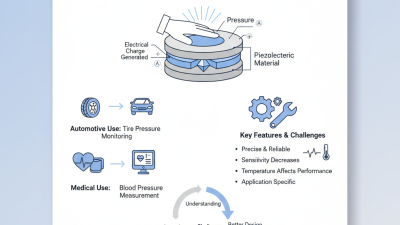
Piezo pressure sensors operate based on the piezoelectric effect. This effect allows certain materials to generate an electrical charge when subjected to mechanical stress. As pressure is applied, the material deforms, producing a voltage that correlates with the pressure level. This response is swift, making piezo sensors ideal for dynamic pressure measurements.
These sensors are widely used in various industries, including aerospace, automotive, and manufacturing. They excel in environments where accuracy and reliability are paramount. For instance, they can monitor engine pressures in real-time, enhancing performance and safety. However, the sensitivity of piezo sensors can lead to challenges. They may not perform well under static pressure conditions. This limits their use in applications requiring steady-state measurements.
Another aspect to consider is temperature sensitivity. Changes in temperature can affect the sensor’s readings. This can result in inaccuracies if not accounted for. Thus, while piezo pressure sensors offer distinct advantages, understanding their limitations is crucial for effective application. Employing them with an awareness of these factors ensures more reliable data and better decision-making in industrial operations.
Top Benefits of Using Piezo Pressure Sensors for Industry
This bar chart illustrates the top benefits of using piezo pressure sensors in various industries. The scores represent the perceived efficacy of each benefit, with high sensitivity and fast response time being the most valued features.
Future Trends in Piezo Pressure Sensor Technology for Industrial Use
The future of piezo pressure sensor technology in industry is promising. Current trends emphasize increasing accuracy and durability. According to a recent industry report, the global piezoelectric sensor market is expected to grow to $3.6 billion by 2025. This growth reflects the rising demand for precise pressure measurements in sectors such as manufacturing and automotive.
One significant trend is the integration of Internet of Things (IoT) capabilities. Sensors equipped with IoT can deliver real-time data analytics. This advancement allows industries to monitor processes continuously. Enhanced data processing can lead to quicker decision-making, reducing downtime. Reports indicate that real-time monitoring can increase efficiency by up to 20% in some applications.
Moreover, there is a focus on miniaturization. Smaller sensors can be integrated into tight spaces, which meets modern design demands. This trend presents challenges as well. Designers must ensure that sensor effectiveness is not compromised when shrinking size. Balancing compactness and performance requires ongoing research. The path forward emphasizes collaboration between engineers and designers to overcome these hurdles.